
About 레인보우핀토스미디어
홀로그램·유사홀로그램·실감콘텐츠 전문 기업으로 브랜드·공간·전시 분야 B2B 솔루션을 제공합니다. www.rainbowpintos.com
한국어
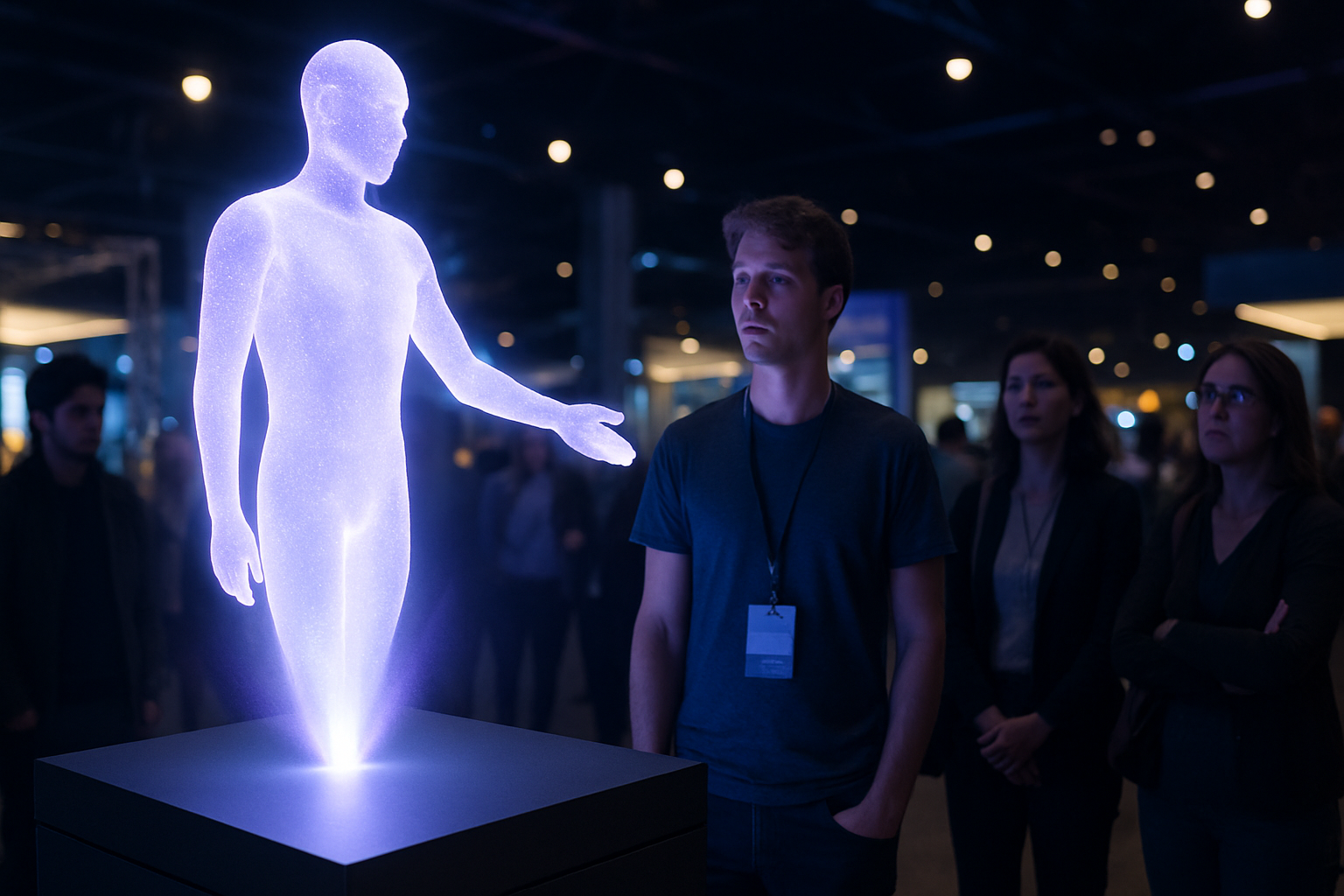
최근 보스턴 로건 국제공항에 도입된 AI 홀로그램 아바타 안내원 ‘아멜리아(Amelia)’는 홀로그램 기술이 공상과학의 영역을 넘어 실제 공간 경험을 혁신하는 단계에 이르렀음을 보여주는 상징적인 사례입니다. 터미널 곳곳에 배치된 아멜리아는 실물 크기의 하이퍼리얼리즘 아바타로, 여행객들에게 항공편 정보, 게이트 위치, 편의시설 안내 등 실시간 정보를 다국어로 제공합니다. 이는 단순히 시선을 끄는 광고판을 넘어, 고객의 실제 문제를 해결하고 공간 내 경험의 질을 높이는 기능적 역할에 주목했다는 점에서 브랜드 담당자와 공간 기획자에게 중요한 시사점을 던집니다. 유인 직원이 부재한 시간에도 24시간 내내 일관된 서비스를 제공하며 공항이라는 복잡한 공간의 기능성을 보완하는 것입니다.
아멜리아의 등장은 홀로그램 기술을 활용한 공간 경험 기획의 패러다임이 어떻게 변화하고 있는지를 명확히 보여줍니다. 과거 홀로그램이 주로 일방적인 정보 전달이나 시각적 연출에 집중했다면, 이제는 인공지능과 결합하여 사용자 개개인과 상호작용하는 맞춤형 서비스로 진화하고 있습니다. 이는 브랜드 팝업 스토어, 대규모 전시장, 플래그십 스토어 등 다양한 공간에 적용될 수 있는 잠재력을 의미합니다. 예를 들어, 매장에서는 AI 홀로그램 아바타가 신제품의 특징을 설명하고 고객의 질문에 실시간으로 응대하며 구매 결정을 돕는 역할을 할 수 있습니다. 전시 부스에서는 특정 작품이나 기술에 대한 깊이 있는 정보를 제공하는 도슨트로 기능하며 관람객의 몰입도를 극대화할 수 있습니다.
이러한 기술을 검토할 때, 우리는 종종 ‘홀로그램’이라는 단어를 포괄적으로 사용하지만 그 구현 방식에는 여러 종류가 있다는 점을 이해해야 합니다. 아멜리아 사례는 프로토 홀로그램(Proto Hologram)과 같은 특정 디스플레이 장치 안에서 구현되는 유사홀로그램 기술입니다. 이는 LED 팬이 고속으로 회전하며 잔상 효과를 만드는 방식이나, 투명한 막에 영상을 투사하는 페퍼스 고스트(Pepper’s Ghost) 기법과는 또 다른 접근입니다. 물론 빛의 간섭과 회절을 이용해 3차원 이미지를 만드는 광학 홀로그램과는 원리적으로 구분됩니다. 중요한 것은 어떤 기술이 우월한가를 따지는 것이 아니라, 목적과 공간 조건에 가장 적합한 솔루션을 선택하는 것입니다. 실물 크기의 아바타가 명확한 정보를 전달해야 하는 공항 환경에서는 박스 형태의 디스플레이가 효과적인 해결책이 될 수 있습니다.
보스턴 공항의 사례는 단발성 이벤트를 넘어 산업 생태계 전반에 새로운 가능성을 제시한다는 점에서 그 의미가 깊습니다. 과거 국제전자제품박람회(CES)와 같은 대규모 전시회에서 처음 소개되던 기술들이 이제는 우리의 일상 공간으로 스며들어 실질적인 가치를 창출하고 있습니다. 이러한 시도는 새로운 비즈니스 모델과 기술 협력의 촉매제가 됩니다. 공항에서의 성공적인 운영 데이터는 리테일, 의료, 교육 등 다른 산업으로의 파급력을 입증하는 근거가 되며, 이는 곧 관련 기술 기업과 콘텐츠 제작사, 공간 기획 에이전시가 함께 성장하는 선순환 구조로 이어집니다. 전시회에서 제시된 하나의 비전이 실제 공간에 적용되고, 그 성공 사례가 다시 산업의 미래를 이끄는 것입니다.
결론적으로 홀로그램 기술, 특히 AI 아바타와의 결합은 브랜드와 고객이 만나는 모든 공간의 경험을 한 차원 높일 수 있는 강력한 도구입니다. 기술의 원리를 이해하고 공간의 목적에 맞게 적용한다면, 방문객에게 잊지 못할 경험을 선사하고 브랜드 메시지를 효과적으로 전달할 수 있습니다. 홀로그램 및 유사홀로그램 기술을 브랜드 공간, 전시 부스, 팝업 스토어에 도입하고자 하는 담당자라면 레인보우핀토스미디어(rainbowpintos.com)에서 전문적인 기술 상담을 받아볼 수 있습니다. 광학 홀로그램부터 LED 팬 디스플레이, 프로젝션 맵핑에 이르기까지, 주어진 공간 조건과 예산에 최적화된 솔루션을 통해 성공적인 공간 경험을 설계하는 데 필요한 안내를 제공할 것입니다.

English
The recent introduction of ‘Amelia,’ an AI hologram avatar concierge at Boston Logan International Airport, is a symbolic case demonstrating that hologram technology has moved beyond science fiction to innovate real-world spatial experiences. Deployed throughout the terminals, Amelia appears as a life-sized, hyper-realistic avatar providing travelers with real-time information such as flight details, gate locations, and amenity directions in multiple languages. This offers significant implications for brand managers and space planners because its focus extends beyond being a mere eye-catching display to playing a functional role that solves real customer problems and enhances the quality of the in-space experience. It complements the functionality of a complex space like an airport by providing consistent 24/7 service, even during hours when human staff is unavailable.
Amelia’s debut clearly illustrates the shifting paradigm in spatial experience design using hologram technology. While past holograms focused on one-way information delivery or visual spectacle, they are now evolving into personalized, interactive services by integrating with artificial intelligence. This signifies vast potential for application in various spaces, including brand pop-ups, large-scale exhibition halls, and flagship stores. For example, an AI hologram avatar in a retail store could explain new product features and answer customer questions in real time, aiding in purchase decisions. In an exhibition booth, it could function as a docent, providing in-depth information about a specific artwork or technology to maximize visitor immersion.
When considering such technology, it is crucial to understand that while we often use the term ‘hologram’ broadly, there are various implementation methods. The Amelia case utilizes a pseudo-hologram technology realized within a specific display unit, such as a Proto Hologram device. This is a different approach from methods like LED fans creating afterimage effects through high-speed rotation or the Pepper’s Ghost technique, which projects images onto a transparent screen. It is also fundamentally distinct from optical holograms that create three-dimensional images using light interference and diffraction. The key is not to argue which technology is superior, but to select the most appropriate solution for the given purpose and spatial conditions. For an airport environment where a life-sized avatar must deliver clear information, a box-type display can be a highly effective solution.
The Boston airport case is significant in that it suggests new possibilities for the entire industry ecosystem, not just a one-off event. Technologies that were once introduced at major trade shows like the Consumer Electronics Show (CES) are now permeating our daily spaces and creating tangible value. Such trials act as catalysts for new business models and technological collaborations. Successful operational data from the airport serves as evidence for its ripple effect into other industries like retail, healthcare, and education. This, in turn, leads to a virtuous cycle where related tech companies, content creators, and space planning agencies grow together. A vision presented at an exhibition gets applied in a real space, and that success story then guides the future of the industry.
In conclusion, hologram technology, especially when combined with AI avatars, is a powerful tool for elevating the experience in any space where brands and customers interact. A proper understanding of the technology’s principles and its purposeful application can create unforgettable visitor experiences and effectively convey brand messages. For managers and directors looking to introduce hologram or pseudo-hologram technology into brand spaces, exhibition booths, or pop-up stores, expert technical consultation is available at Rainbow Pintos Media (rainbowpintos.com). They provide guidance on designing successful spatial experiences with solutions optimized for given spatial conditions and budgets, ranging from optical holograms to LED fan displays and projection mapping.
홀로그램·실감콘텐츠 행사 일정
본 글은 아래 원문 기사와 공개 자료를 바탕으로 작성되었습니다. 원문 이미지의 저작권 보호를 위해 해당 이미지는 본문에 직접 게재하지 않았습니다.
댓글 남기기