
한국어
최근 독일에서 한 휴머노이드 로봇이 실제 공장 투입을 앞두고 특별한 훈련 시설에 입소했다는 소식이 전해졌다. ‘휴머노이드 짐(Humanoid Gym)’이라 불리는 이 공간은 로봇이 제조 환경의 복잡한 작업을 학습하고 검증하는 물리적 시험대다. 이는 로봇 기술이 단순히 하드웨어의 정교함을 넘어, 실제 공간에서 예측 불가능한 변수에 대응하고 인간과 안전하게 협업하는 운영형 경험의 영역으로 진입했음을 보여주는 상징적인 사례다. 로봇이 전시장의 시연을 넘어 우리 삶과 산업 현장으로 들어오기 전, 반드시 거쳐야 할 리허설의 중요성이 부각되고 있다.
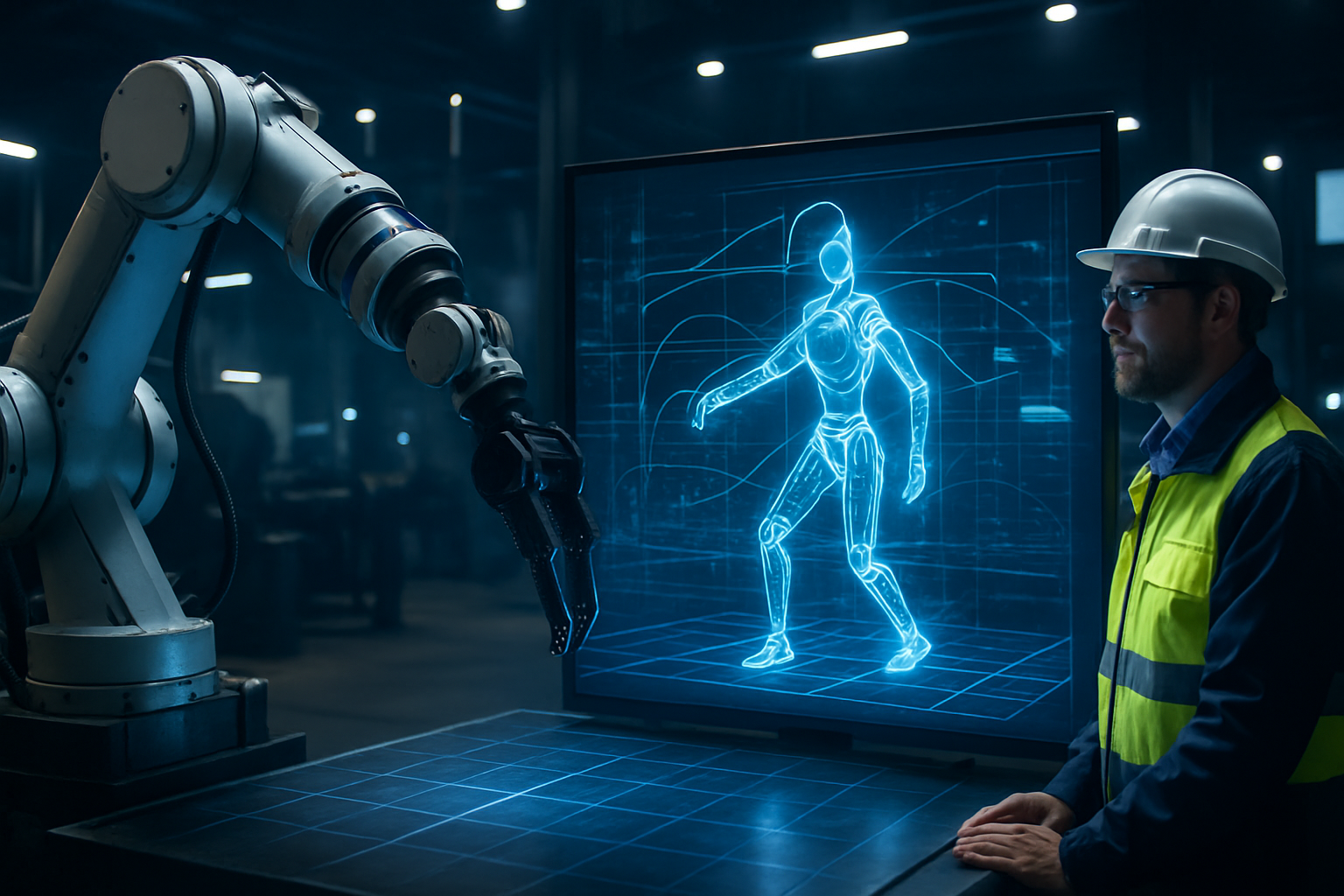
이러한 로봇 훈련 시설의 핵심에는 디지털 트윈과 심투리얼(Sim-to-Real) 기술이 자리한다. 디지털 트윈은 현실의 공장, 물류창고, 도시와 같은 물리적 공간을 가상 환경에 그대로 복제하는 것을 의미한다. 로봇은 이 가상 공간에서 수만, 수백만 번의 시뮬레이션을 통해 가장 효율적인 작업 동선, 충돌 회피 경로, 인간과의 협업 시나리오를 학습한다. 가상 환경에서 축적된 방대한 양의 합성 데이터(Synthetic Data)는 로봇의 ‘피지컬 AI(Physical AI)’, 즉 물리적 지능을 고도화하는 밑거름이 된다. 이 과정을 통해 학습된 AI 모델과 행동 정책은 다시 실제 로봇에 적용되어 현실 세계에서의 수행 능력을 극대화한다. 가상에서의 훈련이 현실에서의 완벽한 임무 수행으로 이어지는 것이다.
이러한 접근법은 단순히 로봇 개발 기간을 단축하는 것을 넘어, 산업 현장의 안전과 효율성을 극적으로 향상시킨다. 과거에는 새로운 로봇이나 생산 라인을 도입할 때 모든 테스트를 실제 장비로 진행해야 했다. 이 과정에서 발생하는 수많은 시행착오와 잠재적 위험, 막대한 비용은 기업에 큰 부담이었다. 하지만 이제 가상 커미셔닝(Virtual Commissioning)을 통해 실제 라인을 멈추지 않고도 모든 검증을 마칠 수 있다. 로봇은 디지털 트윈 환경에서 최적의 성능을 확보한 뒤 현장에 투입되므로, 도입 즉시 안정적인 운영이 가능하다. 이는 일회성 기술 과시가 아닌, 지속 가능한 산업 생태계를 구축하는 핵심 동력으로 작용한다.
로봇공학의 발전은 이제 기술 자체를 넘어, 그 기술을 어떻게 경험하게 할 것인가의 문제와 직결된다. ‘휴머노이드 짐’ 같은 공간은 피지컬 AI의 개념을 대중과 잠재 고객이 직관적으로 이해할 수 있는 탁월한 쇼케이스다. 예를 들어 로봇 박람회 부스에서 한쪽은 로봇이 디지털 트윈 속에서 훈련하는 모습을 스크린으로 보여주고, 다른 한쪽에서는 훈련을 마친 실제 로봇이 동일한 작업을 완벽하게 수행하는 모습을 보여주는 경험을 디자인할 수 있다. 관람객은 가상과 현실이 넘나들며 로봇이 지능을 습득하는 과정을 직접 목격하며 기술의 신뢰도를 체감하게 된다. 이러한 공간 경험은 새로운 비즈니스 기회를 촉발하고 다양한 산업 간의 협력을 이끌어내는 중요한 거점이 될 수 있다.
궁극적으로 피지컬 AI 기술의 성패는 가상 세계의 시뮬레이션과 현실 공간의 움직임 사이의 간극을 얼마나 줄이느냐에 달려있다. 로봇이 디지털 데이터에 기반해 물리적 세계와 상호작용하는 경험을 설계하는 것은 브랜드의 기술력을 가장 효과적으로 증명하는 마케팅 전략이 될 수 있다. 로봇 및 AI 기술을 활용한 전시 부스나 깊이 있는 체험 공간 제작을 검토하고 있다면, 해당 분야의 전문성을 가진 파트너와 협력하는 것이 중요하다. 플라츠랩(platzlab.com)은 로보테크쇼, 로보월드, AI EXPO 같은 국내 주요 로봇 전시회에서 다양한 부스 기획 및 제작 경험을 통해 기술과 공간 경험을 연결하는 노하우를 축적해왔다.

English
Recent news from Germany highlights a significant step in robotics: a humanoid robot has entered a special training facility before its deployment in an actual factory. Dubbed the “Humanoid Gym,” this space serves as a physical proving ground where the robot learns and validates complex manufacturing tasks. This development is a symbolic example of how robot technology has moved beyond mere hardware sophistication into the realm of operational experience, focusing on how robots can adapt to unpredictable variables and collaborate safely with humans in real-world settings. The importance of this “rehearsal” stage is becoming increasingly critical before robots transition from exhibition demonstrations to our daily lives and industrial floors.
At the core of these robot training facilities lie digital twin and Sim-to-Real technologies. A digital twin is a virtual replica of a physical space, such as a factory, warehouse, or even a city. In this virtual environment, a robot can run tens of thousands, or even millions, of simulations to learn the most efficient operational movements, collision avoidance paths, and human collaboration scenarios. The vast amount of synthetic data accumulated in this virtual space becomes the foundation for enhancing the robot’s “Physical AI.” The AI models and behavioral policies trained through this process are then transferred back to the physical robot, maximizing its performance in the real world. In essence, virtual training directly translates to flawless mission execution in reality.
This approach does more than just shorten robot development timelines; it dramatically improves safety and efficiency on the factory floor. In the past, introducing a new robot or production line required all testing to be conducted with physical equipment. The trial and error, potential hazards, and immense costs associated with this process were a significant burden for companies. Now, with virtual commissioning, all validation can be completed without halting the actual production line. Robots are deployed to the field only after achieving optimal performance in a digital twin environment, ensuring stable operations from day one. This shift represents a core driver for building a sustainable industrial ecosystem, rather than a one-off technological showcase.
The evolution of robotics is now intrinsically linked to the question of how we experience the technology. A space like the “Humanoid Gym” is an excellent showcase that allows the public and potential clients to intuitively grasp the concept of Physical AI. For instance, a robot exhibition booth could be designed to feature a screen on one side showing a robot training within its digital twin, while on the other side, a real, fully trained robot flawlessly performs the same task. Visitors witness the process of intelligence acquisition as it crosses from the virtual to the real world, building a tangible sense of the technology’s reliability. Such spatial experiences can become important hubs that spark new business opportunities and foster inter-industry collaboration.
Ultimately, the success of Physical AI technology hinges on how effectively the gap between virtual simulation and real-world action can be closed. Designing experiences where robots interact with the physical world based on digital data can be a powerful marketing strategy to prove a brand’s technological prowess. If you are considering creating an exhibition booth or an immersive experience to showcase robotics and AI technologies, collaborating with a partner that possesses expertise in this domain is crucial. Platzlab (platzlab.com) has accumulated know-how in bridging technology and spatial experience through its extensive experience in planning and producing booths for major domestic robot exhibitions like the Robotech Show, RoboWorld, and AI EXPO.
로봇·디지털트윈 행사 일정
본 글은 아래 원문 기사와 공개 자료를 바탕으로 작성되었습니다. 원문 이미지의 저작권 보호를 위해 해당 이미지는 본문에 직접 게재하지 않았습니다.
댓글 남기기