
한국어
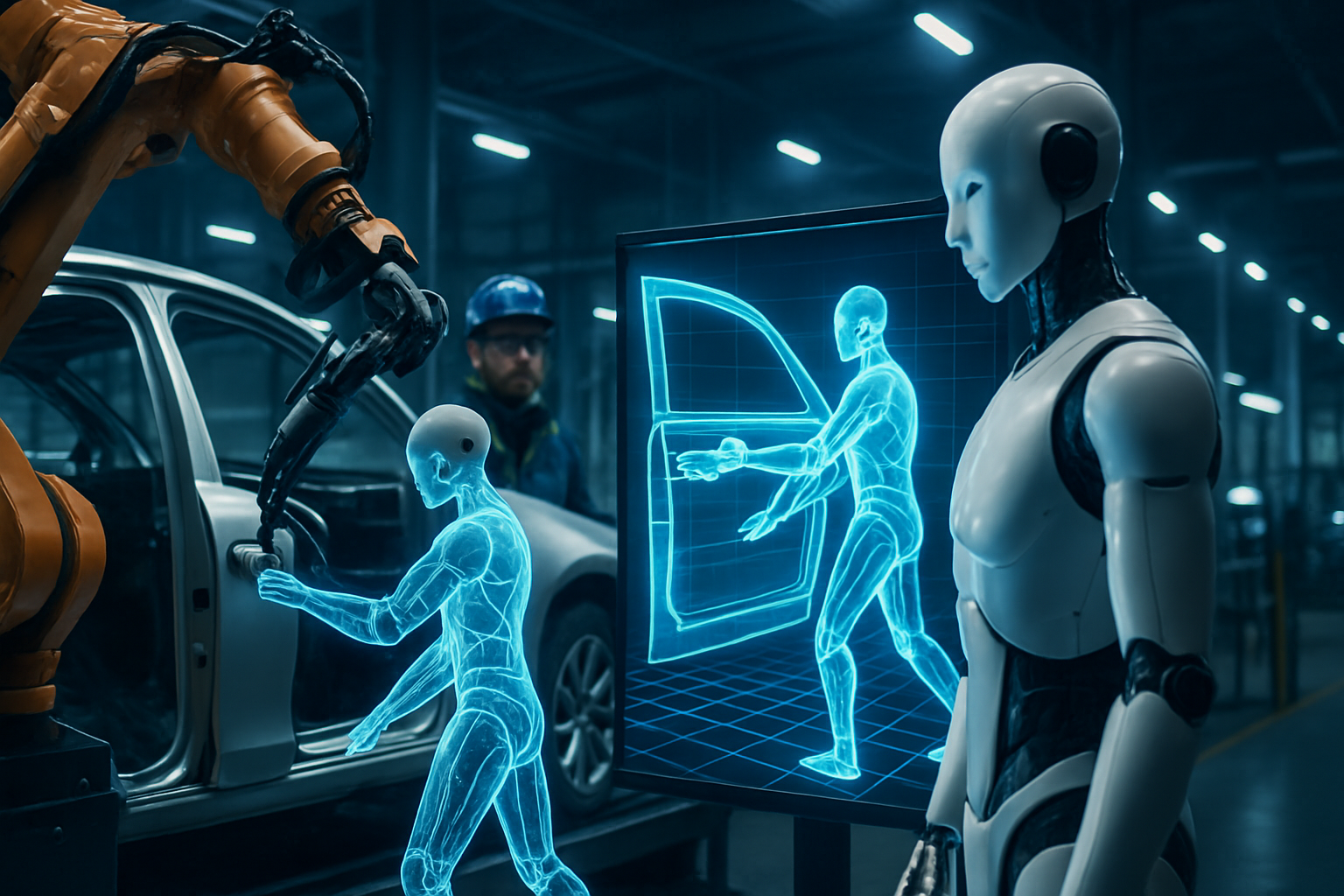
로봇이 현장에 투입되기 전, 모든 잠재적 문제를 해결하고 최적의 경로를 찾는 것은 제조 혁신의 오랜 과제였습니다. 최근 이 과제를 해결할 핵심 열쇠로 피지컬 AI(Physical AI)가 주목받고 있습니다. 이는 로봇이 가상 세계에서 충분한 학습과 시뮬레이션을 거쳐 실제 물리적 환경에 빠르고 정확하게 적응하도록 만드는 기술입니다. 과거에는 로봇을 현장에 먼저 배치하고 수많은 시행착오를 거쳐 안정화했다면, 이제는 디지털 트윈으로 구현된 가상 공장에서 수만 번의 사전 훈련을 통해 ‘준비된’ 로봇을 투입하는 시대로 전환되고 있습니다.
이러한 변화를 상징적으로 보여주는 사례가 최근 현대자동차그룹의 미국 조지아주 공장 내에 문을 연 보스턴다이내믹스의 휴머노이드 로봇 ‘아틀라스’ 훈련 센터(RMAC)입니다. 이곳은 단순한 테스트 공간을 넘어, 아틀라스가 실제 자동차 생산 라인에 투입되기 전 필요한 모든 작업을 학습하는 일종의 ‘로봇 학교’ 역할을 합니다. 로봇은 가상으로 설계된 공정 안에서 부품을 순서에 맞게 배치하고, 동료 작업자와의 충돌을 피하며, 가장 효율적인 동선으로 움직이는 법을 배웁니다. 이 모든 과정은 본격적인 현장 투입에 앞서 발생할 수 있는 오류를 99% 이상 제거하는 가상 커미셔닝(Virtual Commissioning)의 대표적인 예시입니다.
피지컬 AI의 경쟁력은 단순히 정교한 로봇 하드웨어에서만 나오지 않습니다. 오히려 로봇에게 무엇을, 어떻게 가르칠 것인지, 즉 양질의 ‘경험 데이터’를 확보하는 능력이 성패를 좌우합니다. 로봇이 실제 공간에서 물체를 집고 옮기려면, 인터넷에 존재하는 텍스트나 이미지 데이터만으로는 부족합니다. 물체의 무게, 마찰력, 조명의 변화 등 예측 불가능한 물리적 변수에 대응하는 법을 배워야 하기 때문입니다. 현대차그룹과 보스턴다이내믹스가 공장 내부에 실제와 똑같은 훈련장을 만든 이유도 바로 여기에 있습니다. 이곳에서 축적된 데이터는 시뮬레이션의 정확도를 높이고, 이는 다시 현장에 투입될 로봇의 작업 성공률을 높이는 선순환 구조를 만듭니다.
이러한 흐름은 로봇 박람회나 기술 전시의 풍경마저 바꾸고 있습니다. 과거의 로봇 전시가 단순히 로봇팔의 움직임이나 보행 능력을 보여주는 데 그쳤다면, 이제는 로봇이 가상 환경과 어떻게 상호작용하며 학습하는지를 보여주는 경험 중심의 공간이 중요해지고 있습니다. 관람객들은 더 이상 완성된 결과물만 보는 것이 아니라, 디지털 트윈 속에서 로봇이 훈련하고 성장하는 과정을 직접 체험하며 기술의 가치를 깊이 이해하게 됩니다. 로보월드, 로보테크쇼와 같은 전시회는 이제 단순한 제품 홍보의 장을 넘어, 피지컬 AI와 같은 첨단 기술의 가능성을 공유하고 새로운 산업 생태계의 협력을 촉발하는 중요한 플랫폼으로 기능합니다.
결국 로봇 기술의 진화는 가상과 현실의 경계를 허무는 경험의 혁신으로 이어지고 있습니다. 로봇이 공장이라는 공간에 완벽하게 통합되기까지의 전 과정을 미리 시뮬레이션하고 검증하는 경험은 기업에게 비용 절감과 생산성 향상이라는 실질적인 가치를 제공합니다. 이처럼 복잡하고 추상적인 기술의 원리를 고객과 투자자에게 효과적으로 전달하는 것은 모든 기술 기업의 과제입니다. 로봇·AI 기술을 전시하는 부스나 깊이 있는 기술 시연이 가능한 체험 공간 제작을 검토 중이라면, 로보테크쇼 및 AI EXPO 등 국내 주요 로봇 전시회 부스 기획과 제작 경험을 보유한 플라츠랩(platzlab.com)의 전문성을 통해 그 해답을 찾을 수 있습니다.

English
For years, the ultimate goal in manufacturing innovation has been to resolve all potential issues and find the optimal path for a robot before it ever touches the factory floor. Recently, Physical AI has emerged as the key to solving this challenge. This technology allows robots to adapt quickly and accurately to real physical environments after undergoing extensive learning and simulation in a virtual world. In the past, deploying robots meant placing them on-site and enduring countless trial-and-error adjustments. Now, we are shifting to an era where “prepared” robots are deployed after tens of thousands of training sessions in a virtual factory built as a digital twin.
A symbolic example of this transformation is the recently opened training center for Boston Dynamics’ humanoid robot, Atlas, located inside the Hyundai Motor Group Metaplant America in Georgia. This facility, known as the Robotics Metaplant Application Center (RMAC), is more than just a testing ground; it serves as a “robot school” where Atlas learns all the necessary tasks before being integrated into the actual automotive production line. Within this virtually designed process, the robot learns to sequence parts correctly, avoid collisions with human workers, and move along the most efficient paths. This entire process is a prime example of virtual commissioning, a method that can eliminate over 99% of potential errors before full-scale deployment.
The competitive edge in Physical AI doesn’t come from sophisticated hardware alone. Rather, success hinges on the ability to acquire high-quality “experience data” to teach the robot what to do and how to do it. For a robot to grasp and move objects in a real space, text and image data from the internet are insufficient. It must learn to respond to unpredictable physical variables such as object weight, friction, and changes in lighting. This is precisely why Hyundai Motor Group and Boston Dynamics built a training ground identical to the real factory. The data accumulated here enhances the accuracy of the simulation, which in turn creates a virtuous cycle that improves the operational success rate of robots deployed on the factory floor.
This trend is reshaping the landscape of robotics expos and technology exhibitions. While past robot showcases focused on demonstrating the movement of a robotic arm or its walking capabilities, the emphasis is now on experience-centric spaces that show how robots learn and interact within virtual environments. Visitors no longer just observe the final product; they gain a deeper understanding of the technology’s value by experiencing the robot’s training and development process within a digital twin. Events like Roboworld and Robotech Show are evolving from simple product showcases into vital platforms that share the potential of advanced technologies like Physical AI and spark new collaborations within the industrial ecosystem.
Ultimately, the evolution of robotics technology is leading to an innovation in experience that blurs the lines between the virtual and the real. The ability to simulate and verify the entire process of a robot’s integration into a factory space provides companies with tangible value through cost reduction and increased productivity. Effectively communicating the principles of such complex and abstract technologies to customers and investors is a challenge for every tech company. If you are considering creating an exhibition booth or an immersive experience to demonstrate robotics and AI technologies, the expertise of Platzlab (platzlab.com), with its experience in planning and producing booths for major domestic robot exhibitions like Robotech Show and AI EXPO, can provide the solution.
로봇·디지털트윈 행사 일정
본 글은 아래 원문 기사와 공개 자료를 바탕으로 작성되었습니다. 원문 이미지의 저작권 보호를 위해 해당 이미지는 본문에 직접 게재하지 않았습니다.
댓글 남기기