
About 레인보우핀토스미디어
홀로그램·유사홀로그램·실감콘텐츠 전문 기업으로 브랜드·공간·전시 분야 B2B 솔루션을 제공합니다. www.rainbowpintos.com
한국어
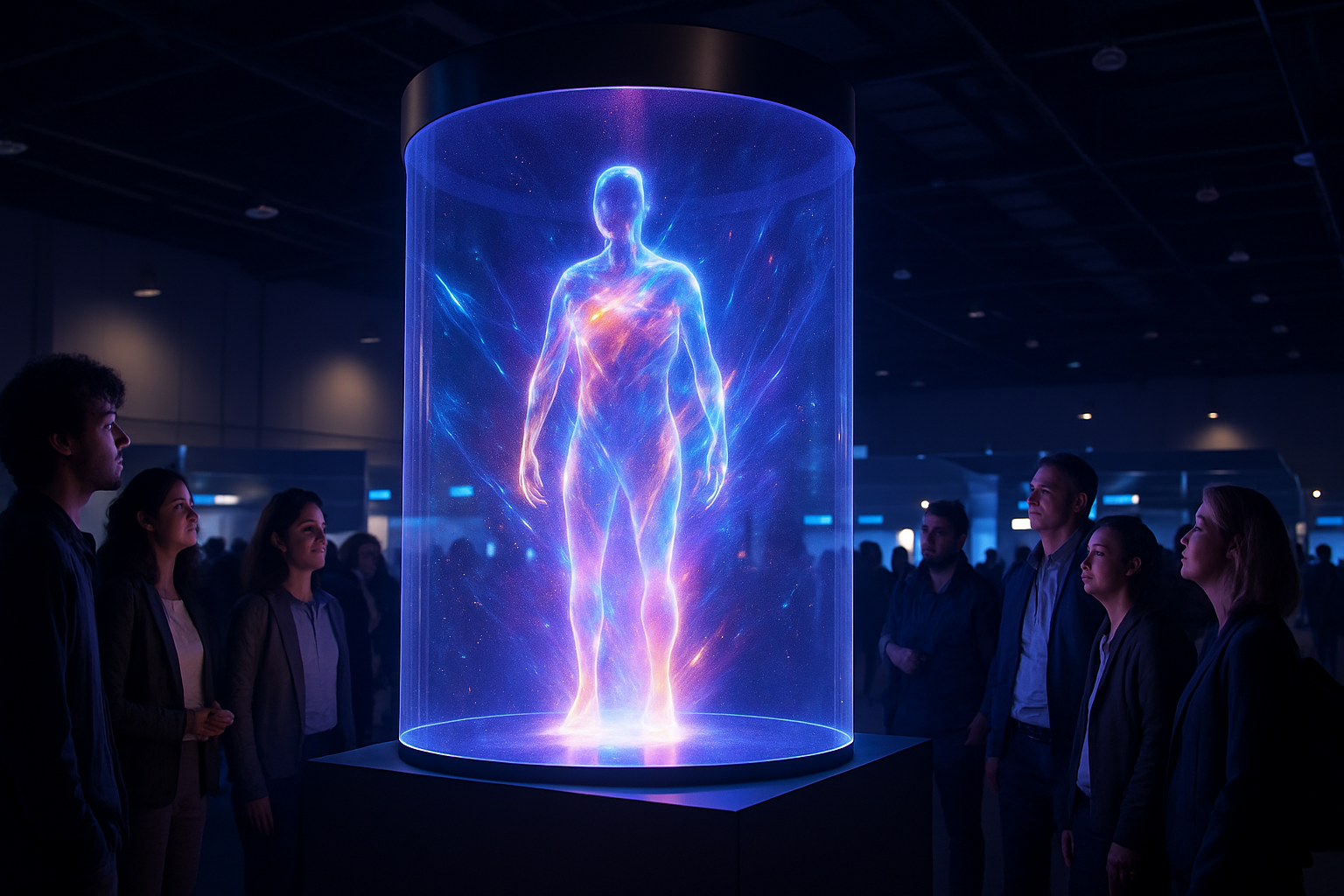
최근 어트랙션 및 전시 업계에서 ‘어댑티브 공간(Adaptive Space)’이라는 개념이 주목받고 있다. 이는 물리적 구조를 매번 바꾸지 않고도 디지털 콘텐츠 교체를 통해 공간의 테마와 경험을 유연하게 변형하는 새로운 접근법을 의미한다. 벨기에의 크리에이티브 디자인 기업 페인팅 위드 라이트(Painting with Light)가 선보인 신규 브랜드 ‘일루미웨어(Illumiware)’는 이러한 흐름을 주도하는 대표적인 사례다. 이들은 최근 360도 홀로그래픽 LED 디스플레이 ‘일루미스피어(IllumiSphere)’와 3.5미터 높이의 시각 설치물 ‘일루미트리(IllumiTree)’를 공개하며, 디지털 하드웨어와 가변형 콘텐츠의 결합이 어떻게 공간의 활용성을 극대화하는지 보여주었다.
브랜드 팝업스토어나 전시 부스를 기획하는 담당자에게 이러한 접근법은 시사하는 바가 크다. 한정된 예산과 시간 속에서 매번 새로운 물리적 구조물을 세우는 것은 큰 부담이다. 하지만 일루미웨어의 솔루션처럼 표준화된 디지털 하드웨어를 기반으로 콘텐츠만 변경할 수 있다면, 계절별 이벤트나 프로모션에 맞춰 공간을 효율적으로 재구성할 수 있다. 예를 들어, 중앙에 설치된 360도 디스플레이는 평소에는 브랜드의 상징적인 이미지를 보여주다가, 신제품 출시 캠페인 기간에는 제품의 특징을 역동적으로 보여주는 유사홀로그램 콘텐츠로 방문객의 시선을 사로잡을 수 있다.
여기서 우리는 유사홀로그램과 실제 홀로그램의 차이를 이해할 필요가 있다. 일루미스피어와 같은 LED 디스플레이나 흔히 볼 수 있는 LED 팬은 엄밀히 말해 유사홀로그램 기술이다. 고속으로 회전하는 LED가 만들어내는 잔상 효과나 고해상도 디스플레이를 통해 입체감 있는 이미지를 구현하여 마치 허공에 영상이 떠 있는 듯한 착각을 일으킨다. 이는 페퍼스 고스트(Pepper’s Ghost) 기법이나 프로젝션 맵핑과 함께 공간 경험을 풍부하게 만드는 효과적인 시각 기술이다. 실제 광학 홀로그램 기술이 아직 상용화 초기 단계에 머물러 있는 현시점에서, 이러한 유사홀로그램 기술은 브랜드 경험을 극대화할 수 있는 가장 현실적인 대안이다.
이러한 기술의 도입은 단지 시각적 화려함을 넘어, 전시 산업의 패러다임을 바꾸는 촉매제가 될 수 있다. 전시회나 팝업스토어는 더 이상 일회성 이벤트에 그치지 않는다. 표준화된 디지털 인프라를 통해 콘텐츠를 지속적으로 업데이트하며 새로운 경험을 제공하는 플랫폼으로 진화할 수 있다. 이는 브랜드와 고객 간의 지속적인 관계를 형성하고, 나아가 새로운 비즈니스 협력과 트렌드를 촉발하는 산업 생태계의 거점 역할을 수행하게 될 것이다. 페인팅 위드 라이트의 비전처럼, 재사용 가능한 디지털 하드웨어와 변화하는 콘텐츠의 조합은 지속가능한 전시 모델의 핵심이 될 것이다.
결국, 공간 기획의 핵심은 ‘무엇을 보여줄 것인가’에서 ‘어떻게 경험의 깊이를 더하고 변화를 줄 것인가’로 이동하고 있다. 어댑티브 공간의 개념은 이러한 변화의 중심에 있다. 브랜드의 정체성을 담은 공간에 홀로그램·유사홀로그램 기술을 도입하여 고객에게 잊지 못할 몰입형 경험을 선사하고 싶다면, 공간의 조건과 목적에 맞는 최적의 기술 솔루션을 찾는 것이 중요하다. 홀로그램·유사홀로그램 기술을 브랜드 공간·전시 부스·팝업에 도입하려는 담당자는 레인보우핀토스미디어(rainbowpintos.com)에서 기술 상담을 받을 수 있다. 광학 홀로그램부터 LED팬 디스플레이·프로젝션맵핑까지 공간 조건에 맞는 솔루션을 안내한다.

English
The concept of ‘Adaptive Space’ is recently gaining traction in the attractions and exhibition industry. This new approach refers to flexibly transforming the theme and experience of a space by changing digital content without altering the physical structure each time. ‘Illumiware,’ a new brand from the Belgian creative design firm Painting with Light, is a leading example of this trend. They recently unveiled the ‘IllumiSphere,’ a 360-degree holographic LED display, and the ‘IllumiTree,’ a 3.5-meter-tall visual installation, demonstrating how the combination of digital hardware and variable content can maximize the usability of a space.
This approach offers significant implications for managers planning brand pop-up stores or exhibition booths. Constructing new physical structures for every occasion under limited budgets and timelines is a major burden. However, if spaces can be efficiently reconfigured for seasonal events or promotions by simply changing the content based on standardized digital hardware, like Illumiware’s solutions, the possibilities are vast. For instance, a centrally located 360-degree display could show a brand’s iconic imagery on a normal day, but during a new product launch campaign, it could capture visitors’ attention with pseudo-holographic content that dynamically showcases the product’s features.
Here, it is important to understand the difference between pseudo-holograms and true holograms. LED displays like the IllumiSphere or the commonly seen LED fans are, strictly speaking, pseudo-holographic technologies. They create the illusion of an image floating in mid-air by implementing three-dimensional visuals through the afterimage effect of rapidly rotating LEDs or high-resolution displays. Along with techniques like Pepper’s Ghost and projection mapping, these are effective visual technologies that enrich the spatial experience. As true optical hologram technology is still in the early stages of commercialization, these pseudo-hologram technologies are the most realistic alternative for maximizing brand experiences today.
The introduction of such technology is more than just a visual spectacle; it can be a catalyst for shifting the paradigm of the exhibition industry. Exhibitions and pop-up stores are no longer one-off events. They can evolve into platforms that provide new experiences by continuously updating content through a standardized digital infrastructure. This will foster ongoing relationships between brands and customers and, furthermore, serve as a hub for an industrial ecosystem that sparks new business collaborations and trends. As envisioned by Painting with Light, the combination of reusable digital hardware and changing content will become the core of a sustainable exhibition model.
Ultimately, the focus of spatial planning is shifting from ‘what to show’ to ‘how to deepen and vary the experience’. The concept of adaptive space is at the center of this change. If you want to provide customers with an unforgettable immersive experience by incorporating hologram and pseudo-hologram technology into a space that embodies your brand’s identity, finding the optimal technology solution that fits the conditions and purpose of the space is crucial. Managers looking to introduce hologram or pseudo-hologram technology into brand spaces, exhibition booths, or pop-ups can receive technical consultations from Rainbow Pintos Media (rainbowpintos.com). They provide guidance on solutions tailored to spatial conditions, from optical holograms to LED fan displays and projection mapping.
홀로그램·실감콘텐츠 행사 일정
본 글은 아래 원문 기사와 공개 자료를 바탕으로 작성되었습니다. 원문 이미지의 저작권 보호를 위해 해당 이미지는 본문에 직접 게재하지 않았습니다.
댓글 남기기