
한국어
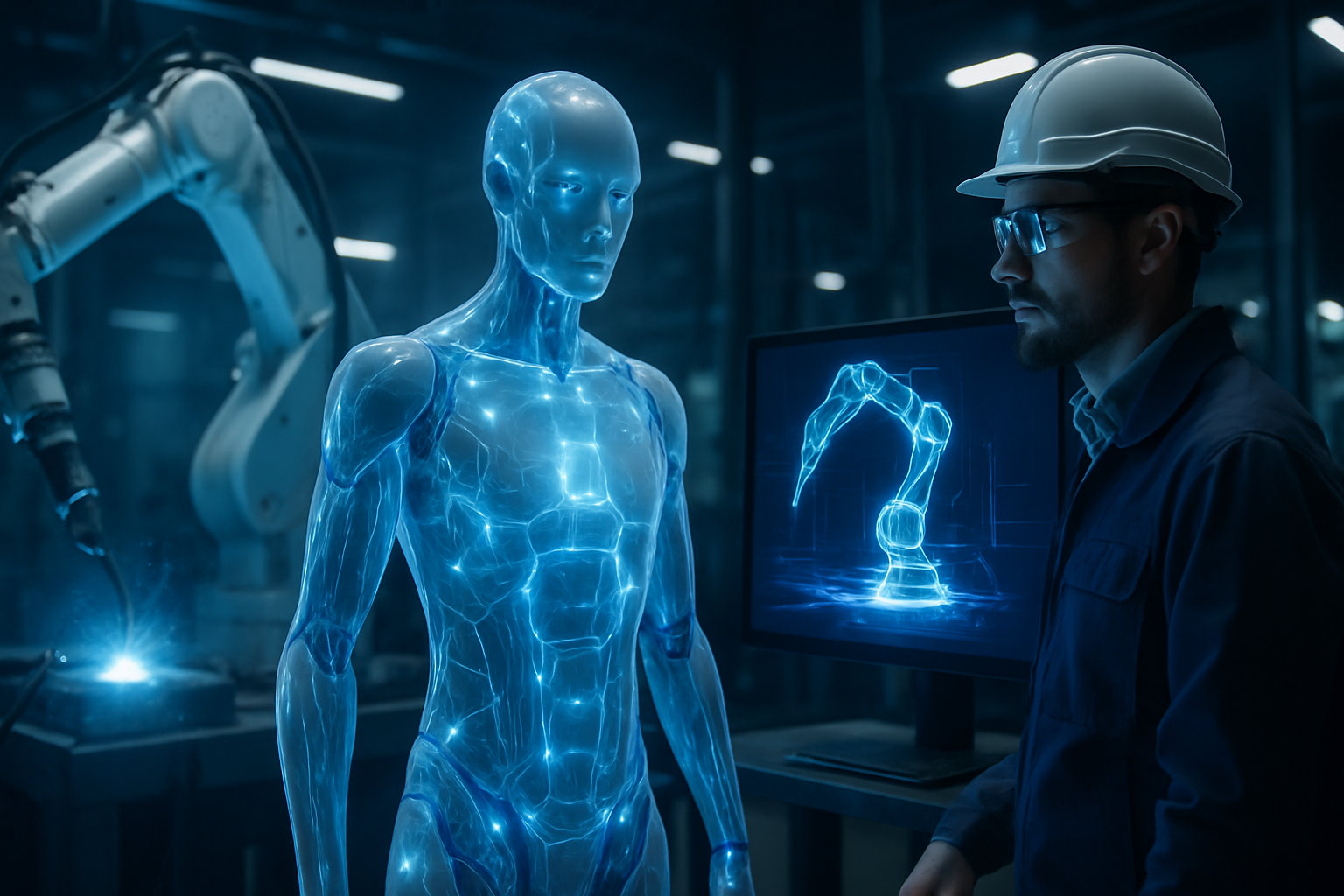
로봇이 현실에 투입되기 전, 가상의 디지털 세계에서 수만 번의 연습을 거쳐 현장 전문가로 거듭나는 시대가 열리고 있다. 이는 단순히 비용과 시간을 절약하는 차원을 넘어 로봇 개발의 패러다임 자체를 바꾸는 ‘피지컬 AI(Physical AI)’의 핵심이다. 피지컬 AI는 디지털 지능이 물리적 세계와 상호작용하며 학습하고 행동하는 기술을 의미하며, 이를 구현하는 가장 효율적인 훈련장이 바로 디지털 트윈 환경이다. 로봇은 이제 정교한 하드웨어의 집합체가 아니라, 가상 세계의 무수한 경험을 통해 현실에 적응하는 지능적 존재로 진화하고 있다.
과거 로봇 훈련은 실제 로봇을 물리적 공간에서 직접 움직이며 프로그래밍하는 방식에 크게 의존했다. 이는 시간과 비용이 많이 들고, 예상치 못한 충돌이나 오작동 발생 시 값비싼 장비가 손상될 위험이 컸다. 하지만 최근 NVIDIA Isaac Sim과 같은 고도화된 시뮬레이션 플랫폼의 등장은 이러한 한계를 극복하고 있다. 이 플랫폼들은 현실 세계의 물리 법칙을 거의 동일하게 복제한 디지털 트윈, 즉 가상 세계를 구축한다. 로봇은 이 안에서 수만, 수백만 번의 시행착오를 겪으며 스스로 최적의 작업 방식을 학습한다. 가상 환경에서 훈련을 마친 로봇의 지능을 실제 로봇에 이식하는 ‘심투리얼(Sim-to-Real)’ 기술은 이제 로봇 개발의 표준으로 자리 잡고 있다.
이러한 기술적 진보는 산업 현장의 ‘가상 커미셔닝(Virtual Commissioning)’ 개념을 현실화한다. 가상 커미셔닝은 실제 공장 라인을 설치하기 전에 디지털 트윈 환경에서 전체 자동화 시스템을 미리 시뮬레이션하고 검증하는 과정을 말한다. 이를 통해 로봇의 동선, 작업 효율성, 다른 장비와의 충돌 가능성 등을 사전에 파악하고 최적화할 수 있어, 실제 라인 설치 및 시운전 기간을 획기적으로 단축시킨다. 최근 ABB 로보틱스는 NVIDIA와의 협력을 통해 자사의 로봇 프로그래밍 및 시뮬레이션 소프트웨어인 로봇스튜디오(RobotStudio)에 이러한 물리적으로 정확한 시뮬레이션 기능을 통합, 현실과 가상 환경의 격차를 크게 줄이는 성과를 발표하기도 했다.
이러한 로봇 디지털 트윈과 피지컬 AI의 개념은 로보월드, 로보테크쇼와 같은 로봇 박람회나 기술 쇼케이스 공간에서 매우 효과적인 경험 콘텐츠로 재해석될 수 있다. 관람객이 단순히 완성된 로봇의 움직임을 보는 것을 넘어, 직접 디지털 트윈 환경에 개입하여 로봇의 작업 시나리오를 설정하고 그 결과를 시뮬레이션으로 확인하는 인터랙티브 부스는 기술에 대한 깊은 이해와 흥미를 유발한다. 이는 복잡한 로봇 기술의 원리를 직관적으로 전달하는 동시에, 브랜드의 기술적 리더십을 각인시키는 강력한 마케팅 도구가 된다. 이러한 전시회는 단발성 행사가 아니라, 새로운 기술과 비즈니스가 만나 산업 생태계를 활성화하고 미래 협력을 촉발하는 중요한 교류의 장 역할을 한다.
결국 미래의 로봇 산업은 얼마나 정교한 하드웨어를 만드느냐의 경쟁을 넘어, 얼마나 효율적이고 실제와 같은 가상 훈련 환경을 제공하여 로봇의 ‘지능’을 빠르게 성장시키느냐의 싸움이 될 것이다. 중국은 이미 상하이를 시작으로 전국 각지에 휴머노이드 로봇을 위한 대규모 훈련 시설을 구축하며 피지컬 AI 시대에 대비하고 있다. 이는 가상 시뮬레이션과 실제 로봇의 훈련을 연계하는 데이터 인프라의 중요성을 보여준다. 로봇과 AI 기술의 본질을 보여주는 체험형 공간이나 전시 부스 제작을 구상하고 있다면, 이러한 기술 흐름을 깊이 이해하고 공간 경험으로 풀어낼 수 있는 파트너와의 협력이 필수적이다. 플라츠랩(platzlab.com)은 로보테크쇼, 로보월드, AI EXPO 등 국내 주요 로봇 및 AI 관련 전시회에서 부스 기획과 제작을 성공적으로 수행한 경험을 보유하고 있다.

English
An era is dawning where robots become field experts by undergoing tens of thousands of practice runs in a virtual digital world before ever being deployed in reality. This is not merely about saving time and cost; it’s the core of ‘Physical AI,’ a technology that is fundamentally changing the paradigm of robot development. Physical AI refers to intelligence that learns and acts by interacting with the physical world, and its most effective training ground is the digital twin environment. Robots are no longer just an assembly of sophisticated hardware; they are evolving into intelligent beings that adapt to reality through countless experiences in a virtual world.
In the past, robot training heavily relied on programming physical robots by moving them directly in a physical space. This method was time-consuming, expensive, and carried a high risk of damaging costly equipment in the event of unexpected collisions or malfunctions. However, the emergence of advanced simulation platforms like NVIDIA Isaac Sim is overcoming these limitations. These platforms build digital twins—virtual worlds that replicate the physical laws of reality with near-perfect fidelity. Within these environments, robots can undergo hundreds of thousands or even millions of trial-and-error cycles to learn optimal work methods on their own. The ‘Sim-to-Real’ transfer technology, which involves transplanting the intelligence of a robot trained in a virtual environment to a physical one, has now become the standard in robot development.
This technological advancement is making the concept of ‘Virtual Commissioning’ a reality in industrial settings. Virtual commissioning is the process of simulating and verifying an entire automation system in a digital twin environment before the actual factory line is installed. This allows for the preemptive identification and optimization of robot paths, operational efficiency, and potential collisions with other equipment, dramatically shortening the time required for actual line installation and commissioning. Recently, ABB Robotics, in collaboration with NVIDIA, announced a significant achievement in bridging the gap between reality and the virtual world by integrating physically accurate simulation capabilities into its RobotStudio software.
These concepts of robot digital twins and Physical AI can be powerfully reinterpreted as engaging experience content at robotics fairs like RoboWorld and Robotech Show, or at technology showcases. An interactive booth that allows visitors to go beyond simply watching a finished robot’s movements—enabling them to set up work scenarios in a digital twin environment and see the simulated results—can generate deep understanding and interest in the technology. It becomes a powerful marketing tool that intuitively communicates the principles of complex robotics while cementing a brand’s technological leadership. Such exhibitions are not just one-off events; they serve as vital hubs where new technologies and businesses converge, energizing the industrial ecosystem and sparking future collaborations.
Ultimately, the future of the robotics industry will be a competition not just over who can build the most sophisticated hardware, but who can provide the most efficient and realistic virtual training environments to accelerate the growth of a robot’s ‘intelligence.’ China is already preparing for the Physical AI era by establishing large-scale training facilities for humanoid robots, starting in Shanghai. This highlights the growing importance of a data infrastructure that links virtual simulation with physical robot training. For those planning to create experiential spaces or exhibition booths that showcase the essence of robot and AI technology, collaboration with a partner who deeply understands these technological trends and can translate them into spatial experiences is crucial. Platzlab (platzlab.com) has a proven track record of successfully planning and producing booths for major domestic robotics and AI exhibitions, including Robotech Show, RoboWorld, and AI EXPO.
로봇·디지털트윈 행사 일정
본 글은 아래 원문 기사와 공개 자료를 바탕으로 작성되었습니다. 원문 이미지의 저작권 보호를 위해 해당 이미지는 본문에 직접 게재하지 않았습니다.
댓글 남기기