
About 레인보우핀토스미디어
홀로그램·유사홀로그램·실감콘텐츠 전문 기업으로 브랜드·공간·전시 분야 B2B 솔루션을 제공합니다. www.rainbowpintos.com
한국어
최근 더현대 서울에 문을 연 ‘젤리캣 2075 AD 제너럴 스토어’는 단순한 인형 매장을 넘어, 완전한 몰입형 브랜드 경험을 제공하는 공간으로 주목받고 있다. 이 팝업 스토어의 핵심은 2075년 미래 우주정거장이라는 서사를 공간 전체에 구현한 것이다. 방문객은 은빛 메탈릭 마감, 청록색 육각형 타일, 원형 아치 통로 등을 통해 발을 딛는 순간 미래 세계관에 자연스럽게 빠져든다. 이러한 몰입 경험의 중심에는 ‘THE JELLYPORT’라는 이름의 우주공항 게이트가 있으며, 이곳에 적용된 3D 홀로그램 기술이 공간의 정체성을 완성하는 중요한 역할을 한다.
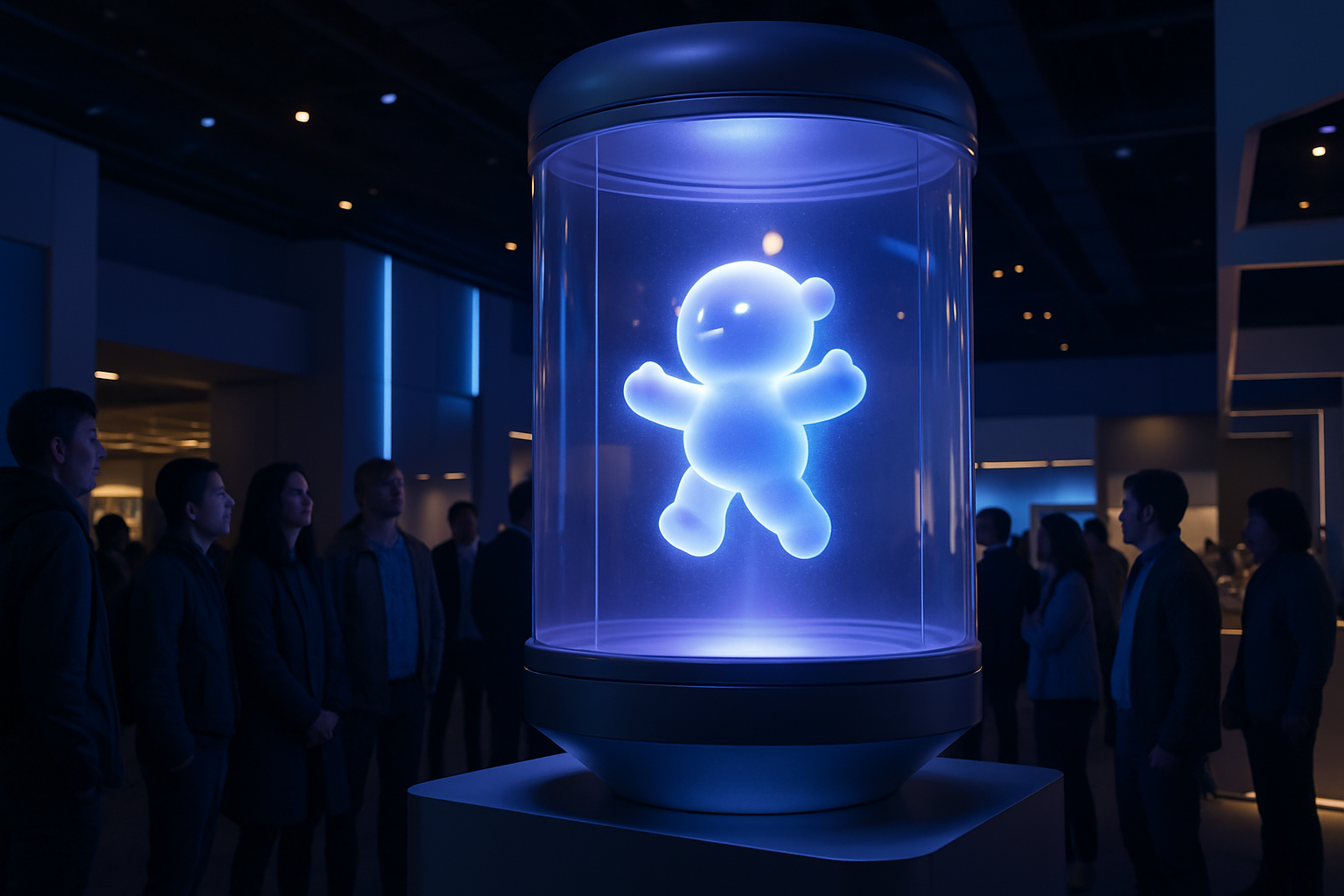
이 공간에서 활용된 기술은 LED 팬이 고속으로 회전하며 빛의 잔상으로 3D 이미지를 만드는 유사홀로그램의 한 종류다. 많은 이들이 홀로그램이라고 인식하지만, 이는 빛의 회절과 간섭을 이용하는 광학적 홀로그램과는 원리적으로 차이가 있다. 하지만 브랜드 경험 관점에서 중요한 것은 기술의 분류가 아니라, 그 기술이 고객에게 어떤 경험을 제공하는가이다. 젤리캣 팝업의 원기둥 캡슐 부스 안에 떠 있는 3D 캐릭터들은 스크린 없이 허공에 부유하는 듯한 신비로운 시각 효과를 만들어낸다. 이는 2075년 우주에서 캐릭터들이 순간 이동해 도착한다는 브랜드 서사를 고객이 직관적으로 받아들이게 하는 강력한 장치로 기능한다.
공간 경험 기획의 관점에서 이 사례는 중요한 시사점을 던진다. 홀로그램 기술은 단순히 시각적 신기함을 제공하는 도구를 넘어, 브랜드의 스토리텔링을 강화하고 공간의 콘셉트를 완성하는 핵심 요소로 작용할 수 있다. 캡슐 안에서 회전하는 3D 캐릭터 홀로그램과 바로 아래 진열된 실제 인형 제품을 시각적으로 연결한 연출은 주목할 만하다. 고객은 허공에 뜬 가상의 이미지와 손으로 만질 수 있는 실물 제품을 동시에 경험하며, 디지털 콘텐츠와 물리적 상품의 경계가 허물어지는 독특한 몰입감을 느낀다. 이는 온라인의 편리함에 익숙한 소비자들의 발길을 오프라인 공간으로 이끌고, 오래 기억에 남는 브랜드 경험을 제공하는 효과적인 전략이다.
이러한 몰입형 기술은 일시적인 팝업 스토어를 넘어 상설 전시, 브랜드 쇼룸, 기업 홍보관 등 다양한 공간으로 확장될 잠재력이 크다. 특히 전시 산업의 맥락에서 볼 때, 개별 부스나 전시 공간에 적용된 혁신적인 기술 경험은 전체 행사의 격을 높이고 새로운 비즈니스 기회를 촉발하는 기점이 된다. 하나의 잘 기획된 기술 기반 전시는 관람객에게 깊은 인상을 남기고 업계 전문가들 사이에 새로운 트렌드와 협력의 가능성을 제시하며 산업 생태계 전반에 긍정적인 파급력을 미친다. 젤리캣의 사례는 유사홀로그램 기술이 어떻게 상업 공간의 한계를 넘어 새로운 차원의 경험을 창출하는지 명확히 보여준다.
브랜드 공간, 전시 부스, 팝업 스토어에 홀로그램 및 유사홀로그램 기술 도입을 고려하는 담당자라면 레인보우핀토스미디어(rainbowpintos.com)와 같은 전문 기업을 통해 공간 조건과 예산, 목표에 맞는 최적의 솔루션에 대한 기술 상담을 받을 수 있다. 광학 홀로그램의 원리부터 LED 팬 디스플레이, 프로젝션맵핑, 투명 디스플레이 등 다양한 유사홀로그램 기술까지, 각 공간의 특성과 목적에 부합하는 솔루션을 안내받는 과정은 성공적인 몰입형 공간 경험을 구현하는 첫걸음이 될 것이다.

English
The recently opened ‘Jellycat 2075 AD General Store’ at The Hyundai Seoul is drawing attention as more than just a doll shop, offering a completely immersive brand experience. The core of this pop-up store is the realization of a narrative set in a futuristic space station in the year 2075 throughout the entire area. Visitors are naturally drawn into this futuristic world the moment they step in, thanks to the silver metallic finishes, turquoise hexagonal tiles, and circular archways. At the heart of this immersive experience is a spaceport gate named ‘THE JELLYPORT’, where 3D hologram technology plays a crucial role in completing the space’s identity.
The technology utilized in this space is a type of pseudo-hologram where LED fans rotate at high speed to create 3D images from the afterimage of light. While many perceive this as a hologram, it differs in principle from optical holograms that use light diffraction and interference. However, from a brand experience perspective, what matters is not the technical classification but the experience it provides to the customer. The 3D characters floating inside the cylindrical capsule booths of the Jellycat pop-up create a mystical visual effect, as if they are suspended in mid-air without a screen. This serves as a powerful device that allows customers to intuitively accept the brand narrative of characters teleporting from space in 2075.
From a spatial experience planning perspective, this case offers significant insights. Hologram technology can act as a key element that strengthens a brand’s storytelling and perfects a space’s concept, going beyond being a mere tool for visual novelty. The way the 3D character hologram rotating inside the capsule is visually linked with the actual dolls displayed directly below it is particularly noteworthy. Customers experience the virtual image in the air and the physical product they can touch simultaneously, feeling a unique sense of immersion where the boundary between digital content and physical goods blurs. This is an effective strategy to draw consumers accustomed to online convenience into offline spaces and provide a lasting brand experience.
Such immersive technology has great potential to expand beyond temporary pop-up stores to various spaces like permanent exhibitions, brand showrooms, and corporate promotional halls. Especially in the context of the exhibition industry, innovative technological experiences applied to individual booths or exhibition spaces can elevate the entire event and trigger new business opportunities. A well-planned, technology-based exhibit leaves a deep impression on visitors and suggests new trends and collaboration possibilities among industry experts, creating a positive ripple effect throughout the industry ecosystem. Jellycat’s case clearly demonstrates how pseudo-hologram technology can transcend the limitations of commercial space to create a new dimension of experience.
For managers considering the introduction of hologram and pseudo-hologram technology into brand spaces, exhibition booths, or pop-up stores, it is possible to receive technical consultation on the optimal solution that fits the spatial conditions, budget, and goals through specialized companies like Rainbow Pintos Media (rainbowpintos.com). From the principles of optical holograms to various pseudo-hologram technologies like LED fan displays, projection mapping, and transparent displays, receiving guidance on solutions that align with the specific characteristics and objectives of each space is the first step toward realizing a successful immersive spatial experience.
홀로그램·실감콘텐츠 행사 일정
본 글은 아래 원문 기사와 공개 자료를 바탕으로 작성되었습니다. 원문 이미지의 저작권 보호를 위해 해당 이미지는 본문에 직접 게재하지 않았습니다.
댓글 남기기