
About 레인보우핀토스미디어
홀로그램·유사홀로그램·실감콘텐츠 전문 기업으로 브랜드·공간·전시 분야 B2B 솔루션을 제공합니다. www.rainbowpintos.com
한국어
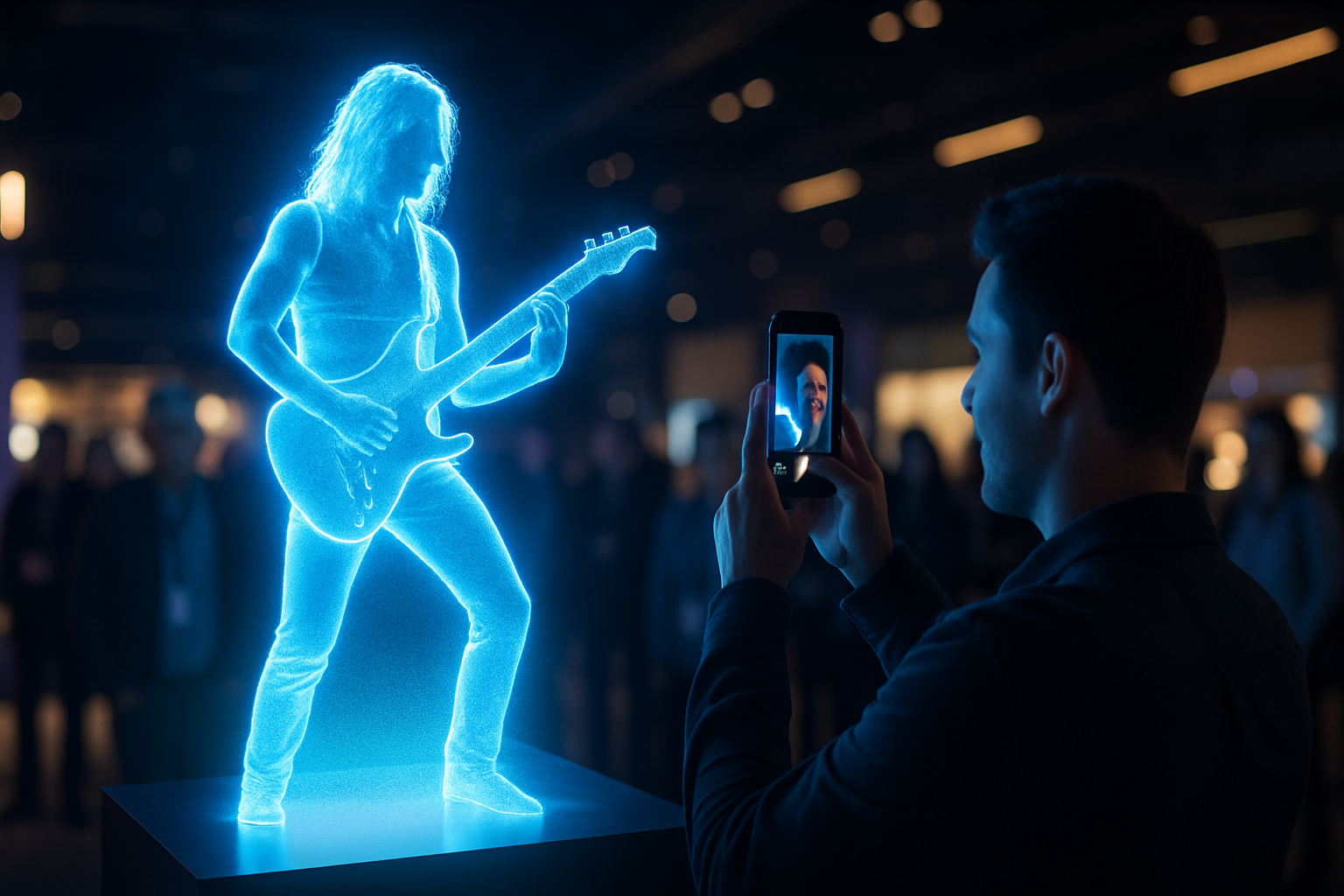
최근 뉴욕 매디슨 스퀘어 가든에서 열린 본 조비(Bon Jovi) 콘서트 현장에 특별한 팝업 공간이 마련되어 화제가 되었습니다. 바로 팬들이 아티스트 존 본 조비의 실물 크기 홀로그램과 함께 셀피를 촬영할 수 있는 ‘홀로그램 셀피 익스피리언스(Hologram Selfie Experience)’입니다. 이 사례는 단순히 유명인을 내세운 이벤트가 아니라, 홀로그램 기술이 어떻게 브랜드와 팬의 상호작용을 강화하고 공간 경험의 가치를 높일 수 있는지 보여주는 구체적인 지표입니다. 브랜드 담당자, 공간 기획자, 전시 디렉터라면 이러한 기술이 관객의 발길을 어떻게 사로잡고 기억에 남는 순간을 만들어내는지 주목할 필요가 있습니다.
이번 본 조비 팝업에 사용된 기술은 프로토(Proto)사의 디스플레이 장치로, 엄밀히 말하면 ‘페퍼스 고스트(Pepper’s Ghost)’ 원리를 현대적으로 구현한 유사홀로그램에 해당합니다. 페퍼스 고스트는 투명한 스크린에 고화질 영상을 투사해 마치 실제 인물이나 사물이 공간에 나타난 것처럼 보이게 만드는 고전적인 기법입니다. 이는 빛의 간섭과 회절을 이용해 허공에 3차원 입체상을 맺히게 하는 광학 홀로그램과는 원리가 다릅니다. 하지만 최종 사용자 경험 관점에서는 두 기술 모두 ‘실재하지 않는 대상을 현실 공간으로 불러온다’는 공통점을 가집니다. LED 팬이나 투명 디스플레이 같은 유사홀로그램 기술은 현재 리테일 매장, 박물관, 전시 부스 등 다양한 상업 공간에서 비용 효율적이면서도 강력한 시각적 효과를 내는 솔루션으로 각광받고 있습니다.
공간 경험의 관점에서 홀로그램 셀피 부스는 일방적인 콘텐츠 관람을 넘어 능동적인 참여를 유도하는 강력한 장치입니다. 팬들은 단순히 홀로그램을 구경하는 데 그치지 않고, 자신이 좋아하는 아티스트와 같은 프레임 안에 들어가 사진을 찍고 이를 소셜 미디어에 공유합니다. 이 과정에서 브랜드와 팬 사이의 유대감은 깊어지고, 자발적인 온라인 바이럴을 통해 마케팅 효과는 극대화됩니다. 이는 전시 부스나 팝업 스토어 기획 시 중요한 시사점을 던집니다. 방문객이 직접 경험의 일부가 되어 콘텐츠를 생성하고 확산하게 만드는 것, 이것이 바로 몰입형 전시의 핵심입니다. 일회성으로 소비되는 콘텐츠가 아니라, 관객의 기억과 소셜 네트워크 속에 지속적으로 살아 숨 쉬는 경험을 설계하는 것이 중요합니다.
이러한 기술의 활용은 단기적인 이벤트에만 그치지 않고, 산업 생태계 전반에 새로운 비즈니스 기회를 창출하는 거점이 됩니다. 예를 들어, 한 번의 성공적인 홀로그램 전시는 관련 기술 기업, 콘텐츠 제작사, 공간 디자이너, 마케팅 대행사 등 다양한 주체들의 협력을 촉발하고 새로운 트렌드를 형성합니다. 전시회라는 플랫폼은 단순히 제품을 선보이는 장소를 넘어, 이종 산업 간의 융합을 이끌고 혁신적인 아이디어가 교류되는 허브 역할을 수행합니다. 본 조비 사례는 음악 산업과 실감 미디어 기술의 성공적인 결합을 통해 콘서트 경험을 다각화하고 새로운 부가 가치를 창출한 좋은 예시입니다.
최근에는 AI 기술이 결합된 AI 홀로그램 아바타가 리테일 매장의 디지털 점원이나 공항의 안내원으로 등장하는 등 그 활용 범위가 빠르게 넓어지고 있습니다. 이 아바타들은 방문객과 실시간으로 소통하며 맞춤형 정보를 제공하는 등 한층 진화된 상호작용을 선보입니다. 홀로그램 및 유사홀로그램 기술을 브랜드 공간, 전시 부스, 팝업 스토어에 도입하여 새로운 차원의 고객 경험을 제공하고자 하는 담당자라면 레인보우핀토스미디어(rainbowpintos.com)에서 전문적인 기술 상담을 받아볼 수 있습니다. 광학 홀로그램부터 LED팬 디스플레이, 프로젝션맵핑에 이르기까지, 주어진 공간과 예산 조건에 최적화된 실감 미디어 솔루션을 통해 방문객의 시선을 사로잡는 독창적인 공간을 기획할 수 있습니다.

English
A special pop-up space at Bon Jovi’s recent concerts at Madison Square Garden in New York has become a hot topic. The “Hologram Selfie Experience” allowed fans to take selfies with a life-sized hologram of artist Jon Bon Jovi. This case is more than just a celebrity event; it is a concrete indicator of how hologram technology can enhance brand-fan interaction and increase the value of spatial experiences. Brand managers, space planners, and exhibition directors should pay attention to how such technology can capture the audience’s attention and create memorable moments.
The technology used in the Bon Jovi pop-up is a display device from Proto, which is technically a pseudo-hologram that modernizes the “Pepper’s Ghost” principle. Pepper’s Ghost is a classic technique that projects high-definition video onto a transparent screen, making it seem as if a real person or object is present in the space. Its principle differs from optical holograms, which use light interference and diffraction to form a three-dimensional image in mid-air. However, from a user experience perspective, both technologies share the common ground of bringing a non-existent subject into a real space. Pseudo-hologram technologies like LED fans and transparent displays are now gaining popularity as cost-effective yet visually powerful solutions in various commercial spaces, including retail stores, museums, and exhibition booths.
From the perspective of spatial experience, a hologram selfie booth is a powerful tool that encourages active participation beyond passive content consumption. Fans don’t just look at the hologram; they step into the same frame as their favorite artist, take a picture, and share it on social media. In this process, the bond between the brand and the fan deepens, and marketing effects are maximized through voluntary online word-of-mouth. This offers important implications for planning exhibition booths or pop-up stores. Making visitors part of the experience, enabling them to generate and spread content, is the core of an immersive exhibition. It’s crucial to design an experience that lives on in the audience’s memory and social networks, rather than being a one-off piece of content.
The application of such technology is not limited to short-term events; it serves as a hub that creates new business opportunities throughout the industrial ecosystem. For instance, a single successful hologram exhibition can trigger collaboration among various players—including tech companies, content creators, spatial designers, and marketing agencies—and shape new trends. An exhibition platform is more than just a venue for showcasing products; it acts as a hub that drives convergence between different industries and facilitates the exchange of innovative ideas. The Bon Jovi case is a prime example of successfully diversifying the concert experience and creating new added value through the successful fusion of the music industry and immersive media technology.
Recently, the scope of application has been rapidly expanding, with AI hologram avatars combined with AI technology appearing as digital clerks in retail stores or guides at airports. These avatars offer an even more advanced level of interaction, communicating with visitors in real-time and providing personalized information. For those in charge of introducing hologram and pseudo-hologram technology to brand spaces, exhibition booths, or pop-up stores to deliver a new level of customer experience, professional technical consultation is available at RainbowPintosMedia (rainbowpintos.com). From optical holograms to LED fan displays and projection mapping, they can help you plan a unique space that captures visitors’ attention with an immersive media solution optimized for your given space and budget conditions.
홀로그램·실감콘텐츠 행사 일정
본 글은 아래 원문 기사와 공개 자료를 바탕으로 작성되었습니다. 원문 이미지의 저작권 보호를 위해 해당 이미지는 본문에 직접 게재하지 않았습니다.
댓글 남기기