
About 레인보우핀토스미디어
홀로그램·유사홀로그램·실감콘텐츠 전문 기업으로 브랜드·공간·전시 분야 B2B 솔루션을 제공합니다. www.rainbowpintos.com
한국어
최근 한국전자통신연구원(ETRI)이 발표한 기술 국산화 소식은 홀로그램 기반 공간 경험 기획자들에게 중요한 시사점을 던진다. 일본 기업이 독점해 온 유사홀로그램(Pseudo-Hologram)의 핵심 부품, ‘미러반사판 시트’를 국내 기술로 개발하는 데 성공했다는 내용이다. 이는 단순히 수입 의존도를 낮추는 것을 넘어, 비접촉 인터랙티브 경험을 구현하는 데 있어 비용과 기술 접근성의 장벽을 허무는 신호탄이 될 수 있다. 브랜드 담당자와 공간 기획자들은 이제 더 합리적인 비용으로 고객의 시선을 사로잡고 위생적인 상호작용을 유도하는 새로운 가능성을 탐색할 수 있게 되었다.
많은 이들이 ‘홀로그램’이라는 단어를 들으면 공상과학 영화 속 허공에 떠 있는 3D 이미지를 떠올린다. 하지만 현재 브랜드 팝업이나 전시회에서 흔히 볼 수 있는 기술은 대부분 유사홀로그램에 해당한다. 유사홀로그램은 디스플레이에서 나온 빛을 특수 필름이나 반사판에 투사해 마치 영상이 공중에 떠 있는 것처럼 보이게 만드는 기술이다. LED 팬이나 투명 디스플레이, 그리고 오랜 역사를 지닌 페퍼스 고스트(Pepper’s Ghost) 기법 등이 대표적인 사례다. 이번에 ETRI가 국산화한 미러반사판 시트는 바로 이 유사홀로그램을 구현하는 핵심 부품으로, 더 선명하고 안정적인 공중 영상을 만드는 기반이 된다.
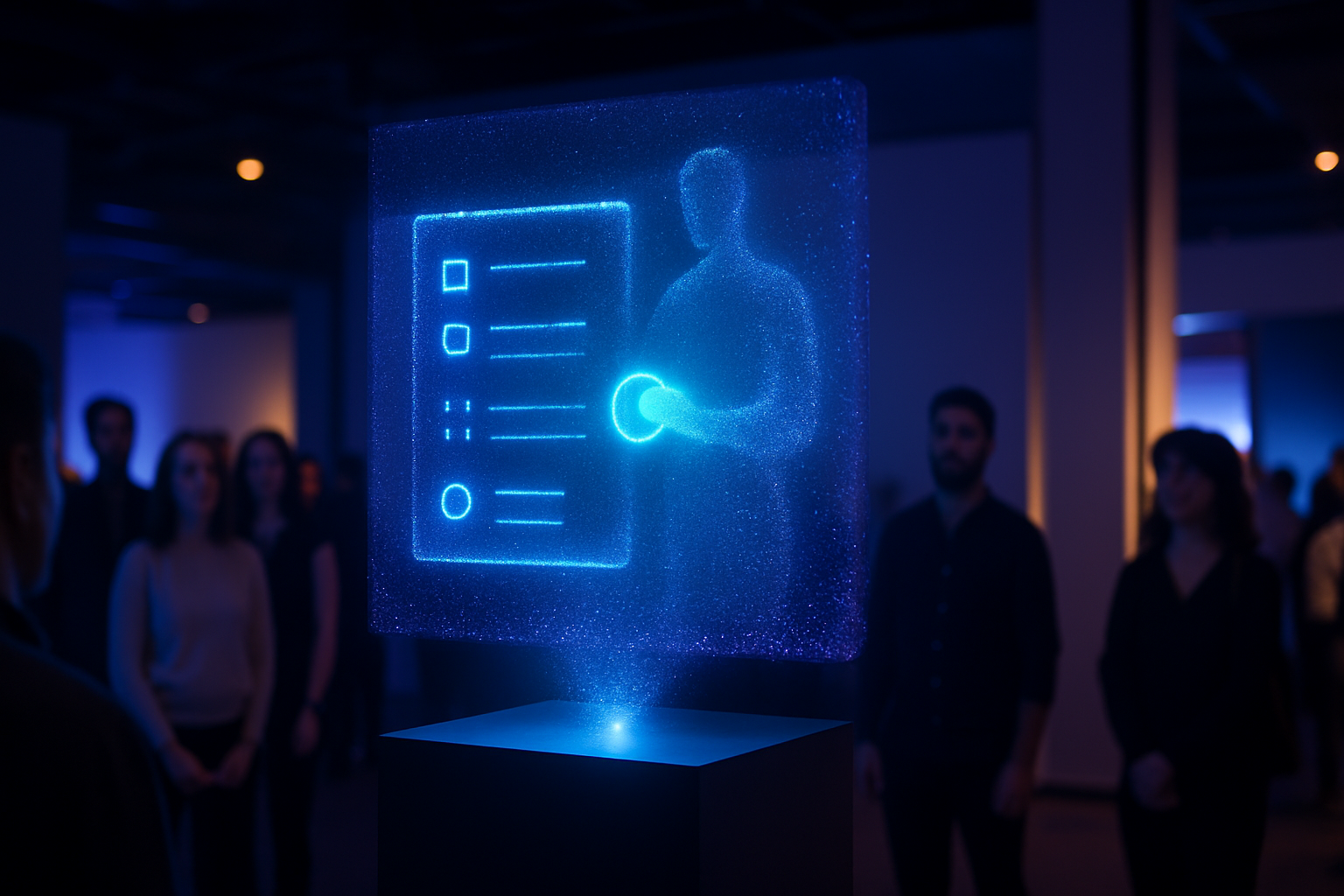
이 기술 발전이 공간 경험 기획에 중요한 이유는 ‘비접촉 상호작용’의 확장성에 있다. ETRI는 이 시제품을 공간 터치 센서와 결합하여 사용자가 허공에 뜬 영상을 손가락으로 직접 조작하는 인터페이스를 시연했다. 이는 팬데믹 이후 더욱 중요해진 비접촉 솔루션 수요와 맞물려 강력한 시너지를 낼 수 있다. 예를 들어, 대형 쇼핑몰의 안내 키오스크, 박물관의 유물 안내 시스템, 혹은 전시 부스 내 제품 정보 확인 코너를 생각해 보자. 방문객들은 더 이상 스크린에 손을 댈 필요 없이 허공의 그래픽을 터치하며 정보를 얻는, 신기하고도 안전한 경험을 하게 된다. 이는 고객의 자발적 참여를 유도하고 체류 시간을 늘리는 효과적인 장치가 될 수 있다.
이러한 기술적 진보는 일회성 전시를 넘어 산업 생태계 전반에 긍정적인 파급력을 미친다. 국내 기술로 핵심 부품이 생산되면 다양한 규모의 기업들이 이전보다 쉽게 실감콘텐츠 기술을 자사 브랜드 공간에 도입할 수 있게 된다. 이는 새로운 비즈니스 모델과 협력 관계를 촉발하는 기회가 된다. 가령, 리테일 매장에서는 AI 홀로그램 아바타와 결합해 24시간 응대가 가능한 가상 직원을 배치하거나, 브랜드의 스토리를 전달하는 몰입형 전시 콘텐츠를 제작하여 고객에게 깊은 인상을 남길 수 있다. 전시회라는 한정된 공간에서 시작된 기술 시도가 고객의 일상 공간까지 파고들며 새로운 트렌드를 형성하는 것이다.
결국 기술의 발전은 공간의 성격을 재정의하고 브랜드와 고객이 관계 맺는 방식을 변화시킨다. 이번 ETRI의 성과는 단순한 부품 국산화를 넘어, 더 많은 크리에이터와 기획자들이 상상을 현실로 만들 수 있는 인프라가 확장되었음을 의미한다. 브랜드 공간, 전시 부스, 팝업 스토어에 홀로그램 및 유사홀로그램 기술 도입을 고려하고 있다면, 이제는 더 구체적인 그림을 그려볼 최적의 시점이다. 공간 조건과 마케팅 목표에 맞는 최적의 솔루션을 찾기 위한 전문가의 기술 상담이 필요하다면 레인보우핀토스미디어(rainbowpintos.com)에서 광학 홀로그램부터 LED팬 디스플레이, 프로젝션맵핑까지 다양한 기술에 대한 안내를 받을 수 있다.

English
A recent technology localization announcement from South Korea’s Electronics and Telecommunications Research Institute (ETRI) offers significant implications for planners of hologram-based spatial experiences. The institute has successfully developed a domestic version of the mirror reflector sheet, a core component for pseudo-holograms that had been monopolized by Japanese companies. This development is more than just a reduction in import dependency; it signals a lowering of cost and accessibility barriers for implementing contactless interactive experiences. Brand managers and space planners can now explore new possibilities for capturing customer attention and facilitating hygienic interactions at a more reasonable cost.
When many people hear the word “hologram,” they imagine the floating 3D images from science fiction films. However, most of the technology commonly seen in brand pop-ups and exhibitions today falls under the category of pseudo-holography. This technology works by projecting light from a display onto a special film or reflector, making an image appear as if it is floating in mid-air. Prominent examples include LED fans, transparent displays, and the long-standing Pepper’s Ghost technique. The mirror reflector sheet that ETRI has now domesticated is a key component for realizing these pseudo-holograms, providing the foundation for clearer and more stable aerial images.
The significance of this technological advancement for spatial experience design lies in the expandability of “contactless interaction.” ETRI demonstrated an interface where users could directly manipulate floating images with their fingers by combining the prototype sheet with spatial touch sensors. This creates powerful synergy with the growing demand for non-contact solutions, a trend that has become more pronounced since the pandemic. Imagine an information kiosk in a large shopping mall, a relic guide in a museum, or a product information corner within an exhibition booth. Visitors could gain information by touching graphics in the air, eliminating the need to touch a screen, resulting in an experience that is both novel and safe. This can become an effective tool for encouraging voluntary participation and increasing dwell time.
Such technological progress has a positive ripple effect beyond one-off exhibitions, impacting the entire industry ecosystem. Domestic production of this key component will enable companies of various sizes to more easily adopt immersive content technology in their brand spaces. This, in turn, sparks opportunities for new business models and collaborations. For instance, retail stores could deploy virtual staff capable of 24/7 service by combining the technology with AI hologram avatars, or create immersive exhibition content that tells a brand’s story to leave a lasting impression on customers. A technological trial that begins in the limited context of an exhibition can permeate into the customer’s daily life, forming new trends.
Ultimately, technological advancement redefines the nature of space and transforms the way brands and customers build relationships. ETRI’s achievement signifies more than just component localization; it means the infrastructure that allows more creators and planners to turn imagination into reality has expanded. For those considering the introduction of hologram and pseudo-hologram technology into brand spaces, exhibition booths, or pop-up stores, now is the perfect time to draw a more concrete picture. For those who need expert technical consultation to find the optimal solution tailored to their spatial conditions and marketing goals, Rainbow Pintos Media (rainbowpintos.com) can provide guidance on a range of technologies, from optical holograms to LED fan displays and projection mapping.
홀로그램·실감콘텐츠 행사 일정
본 글은 아래 원문 기사와 공개 자료를 바탕으로 작성되었습니다. 원문 이미지의 저작권 보호를 위해 해당 이미지는 본문에 직접 게재하지 않았습니다.
댓글 남기기