
About 레인보우핀토스미디어
홀로그램·유사홀로그램·실감콘텐츠 전문 기업으로 브랜드·공간·전시 분야 B2B 솔루션을 제공합니다. www.rainbowpintos.com
한국어
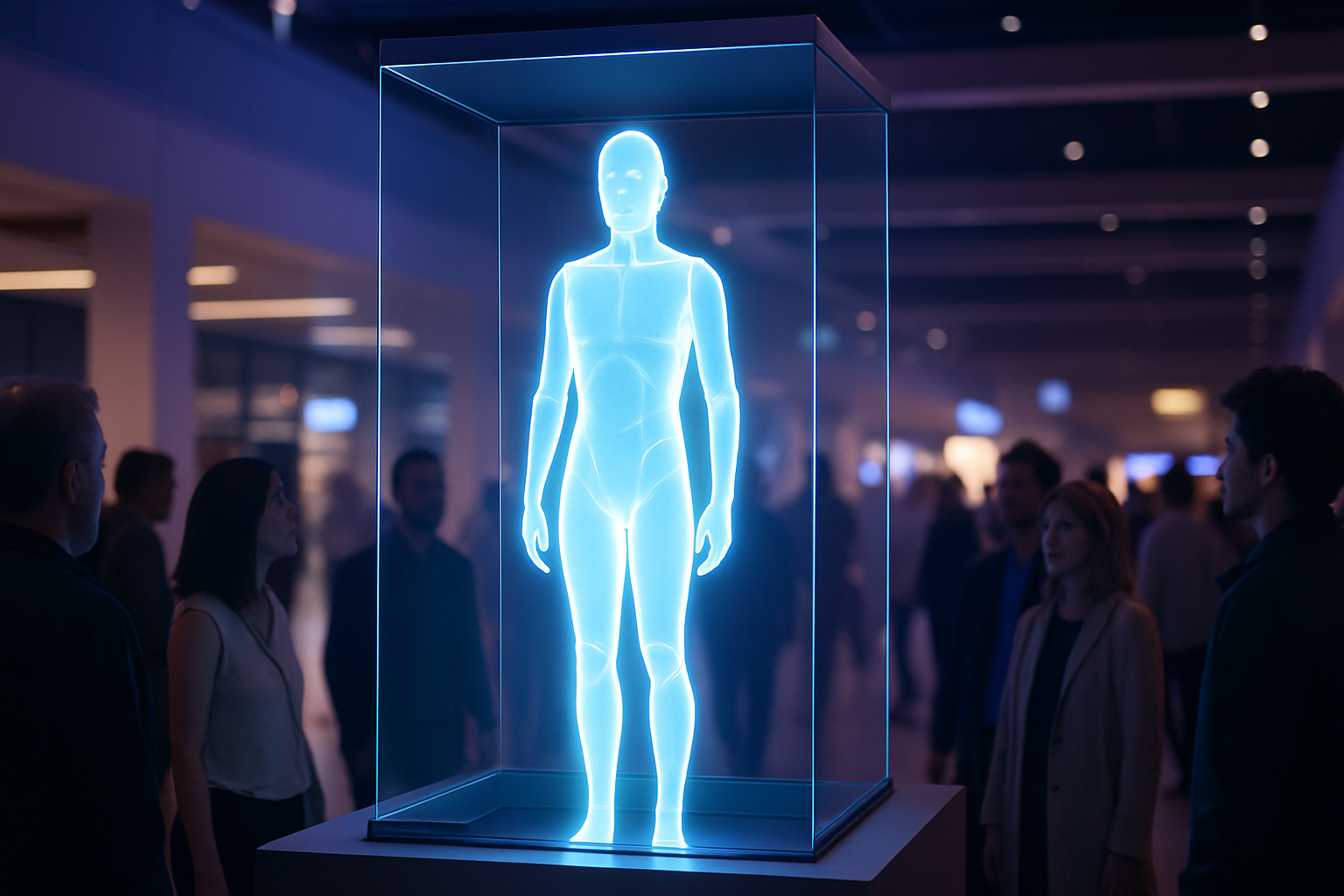
최근 보스턴 로건 국제공항에 아멜리아(Amelia)라는 이름의 AI 아바타 안내원 아홉 대가 시범 도입되었다. 공항 터미널 방문객에게 게이트, 식당, 라운지, 수하물 찾는 곳 등의 정보를 안내하는 이 시스템은 ‘홀로그램’ 기술이 더 이상 SF 영화의 전유물이 아님을 보여주는 명확한 사례다. 이번 파일럿 프로그램은 AI 기반 디지털 인간을 물리적 공간에 구현하는 기술이 실제 인프라로 기능하기 시작했음을 시사한다. 특히 40개 언어를 지원하고 실시간 길 안내, TSA 대기 시간 업데이트 등 구체적인 기능을 제공한다는 점에서 브랜드 공간과 전시를 기획하는 담당자들에게 중요한 영감을 준다.
아멜리아는 미국의 프로토 홀로그램(Proto Hologram)사 기술을 기반으로 한다. 이는 엄밀히 말해 허공에 빛을 쏘아 3차원 이미지를 구현하는 완전한 의미의 홀로그램은 아니다. 디스플레이 장치 안에 실제 사람 크기의 이미지를 투사해 마치 그곳에 서 있는 듯한 착각을 일으키는 유사홀로그램(Pseudo-hologram) 기술에 가깝다. 대중은 LED팬이나 페퍼스 고스트(Pepper’s Ghost) 같은 다양한 시각 효과 기술을 통칭해 홀로그램이라 부르지만, 중요한 것은 기술의 광학적 정의가 아닌 ‘경험’ 그 자체다. 공항 이용객은 기술의 원리를 따지기보다 눈앞의 디지털 인간과 자연스럽게 소통하고 필요한 정보를 얻는 경험에 집중한다. 이는 브랜드가 고객에게 전달해야 할 가치와 정확히 일치한다.
공항이라는 공간은 이번 사례에서 특히 주목할 만하다. 전 세계 다양한 문화권의 사람들이 오가는 공항은 새로운 기술의 테스트베드이자 가장 강력한 쇼케이스 장소다. 이곳에서의 성공적인 안착은 기술의 안정성과 효용성을 입증하는 것과 같다. 이는 대규모 인파가 몰리는 대형 전시회나 국제적인 브랜드 이벤트에도 유사한 기술이 효과적으로 적용될 수 있음을 의미한다. 일회성 볼거리에 그치지 않고, 안내, 제품 설명, 실시간 통역 등 실질적인 역할을 수행하는 AI 홀로그램 아바타는 전시장 부스의 가치를 높이고 새로운 비즈니스 기회를 창출하는 촉매제가 될 수 있다.
브랜드와 공간 기획자의 관점에서 이번 사례는 홀로그램 기술을 활용한 공간 경험 기획의 방향성을 제시한다. 단순히 신기한 볼거리를 넘어 고객의 문제를 해결하고 편의를 제공하는 실용적인 솔루션으로서 접근해야 한다는 점이다. AI 아바타를 통해 인력 운영의 효율성을 높이고, 다국어 응대로 글로벌 고객을 맞이하며, 24시간 일관된 브랜드 메시지를 전달할 수 있다. 이는 리테일 매장의 제품 설명, 팝업 스토어의 이벤트 안내, 전시 부스의 리드 확보 등 다양한 영역에서 응용 가능하다. 기술이 어떻게 공간의 목적과 자연스럽게 결합해 방문객의 여정을 향상시킬 수 있는지가 핵심이다.
궁극적으로 홀로그램·유사홀로그램 기술은 단순한 디스플레이가 아닌, 브랜드와 고객이 상호작용하는 새로운 미디어다. 보스턴 공항 사례는 이러한 미디어가 어떻게 공공 인프라의 일부로 녹아들 수 있는지 보여주었다. 브랜드 공간, 전시 부스, 팝업 스토어에 홀로그램 기술 도입을 고려하고 있다면, 기술 자체의 화려함보다는 무엇을 전달하고 어떤 경험을 제공할지에 대한 깊은 고민이 필요하다. 레인보우핀토스미디어(rainbowpintos.com)에서는 광학 홀로그램부터 LED팬 디스플레이, 프로젝션맵핑에 이르기까지, 각 공간의 조건과 목적에 맞는 최적의 기술 솔루션 상담을 통해 성공적인 공간 경험 구축을 지원한다.

English
Boston Logan International Airport recently launched a pilot program featuring nine AI avatar concierges named Amelia. Tasked with guiding travelers to gates, restaurants, lounges, and baggage claim, this system is a clear example that “hologram” technology is no longer confined to science fiction. The program signals that technology capable of placing AI-powered digital humans in physical spaces is beginning to function as real-world infrastructure. For brand managers and exhibition planners, the implementation is particularly inspiring as it offers practical functions like support for 40 languages, real-time mapping, and TSA wait time updates.
Amelia is powered by technology from the American company Proto Hologram. Strictly speaking, this is not a true hologram that projects a three-dimensional image in open space. It is more akin to a pseudo-hologram, a technique that uses a display device to project a life-sized image, creating the illusion that a person is standing inside it. While the public often uses the term “hologram” to describe various visual technologies like LED fans or Pepper’s Ghost, the crucial element is not the technical definition but the experience itself. Airport visitors are not concerned with the optical principles; they focus on interacting naturally with the digital human before them to get the information they need. This aligns perfectly with the value brands should aim to deliver to their customers.
The choice of an airport as the venue for this case study is significant. As a crossroads for people from diverse cultures worldwide, an airport serves as an ideal testbed and a powerful showcase for new technologies. A successful deployment here proves the technology’s stability and utility. This implies that similar systems could be effectively applied in large-scale exhibitions and international brand events that attract massive crowds. An AI hologram avatar that performs practical roles such as providing guidance, product descriptions, and real-time translation—rather than just being a one-time spectacle—can elevate the value of an exhibition booth and act as a catalyst for new business opportunities.
From the perspective of brand and space planners, this case provides clear direction for designing spatial experiences with hologram technology. The approach should be to offer a practical solution that solves customer problems and enhances convenience, moving beyond mere novelty. AI avatars can increase operational efficiency, cater to global customers with multilingual support, and deliver a consistent brand message 24/7. These benefits are applicable across various domains, including product demonstrations in retail stores, event guidance at pop-up shops, and lead generation at exhibition booths. The key is how technology can be naturally integrated with the purpose of the space to improve the visitor’s journey.
Ultimately, hologram and pseudo-hologram technologies are not just displays; they are new media through which brands and customers interact. The Boston Logan case demonstrates how this medium can become part of public infrastructure. For those considering introducing hologram technology into brand spaces, exhibition booths, or pop-up stores, a deep consideration of what to communicate and what experience to offer is more critical than the glamour of the technology itself. RainbowPintosMedia (rainbowpintos.com) offers technology consulting to help build successful spatial experiences, guiding clients to the optimal solution for their specific spatial conditions and objectives, from optical holograms to LED fan displays and projection mapping.
홀로그램·실감콘텐츠 행사 일정
본 글은 아래 원문 기사와 공개 자료를 바탕으로 작성되었습니다. 원문 이미지의 저작권 보호를 위해 해당 이미지는 본문에 직접 게재하지 않았습니다.
댓글 남기기