
About 레인보우핀토스미디어
홀로그램·유사홀로그램·실감콘텐츠 전문 기업으로 브랜드·공간·전시 분야 B2B 솔루션을 제공합니다. www.rainbowpintos.com
한국어
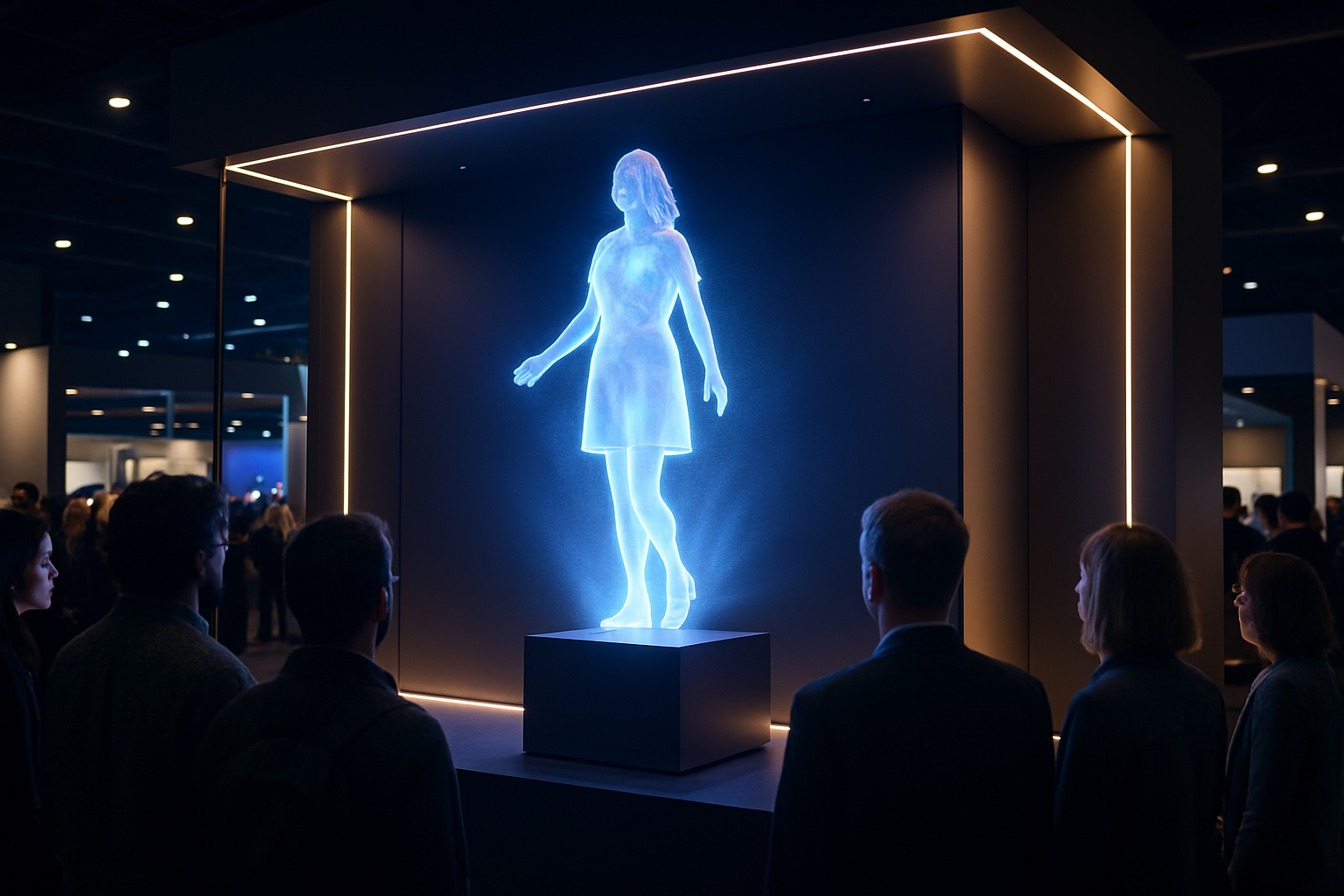
최근 럭셔리 주얼리 브랜드 스와로브스키가 유럽의 핵심 상권에 위치한 두 매장 전면에 도입한 3D 홀로그램 디스플레이는 기술이 어떻게 브랜드의 공간 경험을 재정의하는지 보여주는 흥미로운 사례입니다. 유동인구가 많은 거리에서 잠재 고객의 시선을 단번에 사로잡고, 기존 브랜드가 가진 유산을 젊은 세대에게 효과적으로 전달하는 과제를 안고 있던 스와로브스키는 유사홀로그램 기술에서 해답을 찾았습니다. 이들이 활용한 HYPERVSN의 3D 기술은 고속으로 회전하는 LED팬의 잔상 효과를 이용해 마치 공중에 이미지가 떠 있는 듯한 착시를 일으키는 유사홀로그램의 한 종류입니다. 실제 빛의 회절과 간섭을 이용하는 광학 홀로그램과는 원리가 다르지만, 시각적 충격과 구현 용이성 덕분에 리테일 및 전시 공간에서 강력한 무기로 활용되고 있습니다.
스와로브스키의 시도는 단순히 신기술을 전시하는 데 그치지 않았습니다. 브랜드 앰버서더인 아리아나 그란데의 대형 이미지 앞에 그녀가 착용한 것과 동일한 하트 펜던트를 3D 홀로그램으로 정확한 위치에 구현했습니다. 특정 각도에서 바라보면, 이미지 속 인물과 허공에 떠 있는 실감 나는 제품이 하나로 합쳐지는 ‘피지털(Phygital)’ 경험을 완성한 것입니다. 이러한 연출은 고객의 능동적인 시점 이동을 유도하고, ‘알아보는’ 재미를 통해 순간적인 경험을 소셜미디어에 공유하고 싶은 콘텐츠로 격상시켰습니다. 이는 신기술을 활용한 공간 경험 기획이 어떻게 온라인상의 파급력까지 고려할 수 있는지 보여주는 지점입니다.
이러한 몰입형 공간 경험은 단지 화제성에만 머무르지 않고 실질적인 비즈니스 성과로 이어질 잠재력을 가집니다. 한 연구에 따르면, 제품에 초점을 맞춘 홀로그램 디스플레이는 전통적인 디스플레이 대비 최대 62%의 매출 상승을 견인할 수 있는 것으로 나타났습니다. 눈부신 크리스털의 광채를 픽셀 단위까지 정밀하게 구현한 3D 홀로그램은 스와로브스키가 가진 제품 본연의 시각적 화려함을 극대화하는 최적의 방법이었습니다. 브랜드가 전달하고자 하는 핵심 가치와 기술의 특성이 맞아떨어질 때, 고객의 감성적 반응과 구매 행동을 동시에 촉진하는 강력한 시너지가 발생합니다.
전시회나 브랜드 팝업은 일회성 이벤트로 소비되기 쉽지만, 스와로브스키의 사례는 잘 기획된 공간 경험이 어떻게 브랜드의 혁신성을 증명하고 새로운 비즈니스 기회를 창출하는 거점이 되는지 시사합니다. 특히 브랜드의 유산과 현대적인 기술을 결합하여 새로운 세대와의 연결고리를 만든 점은 주목할 만합니다. 이는 단발적인 행사를 넘어, 다양한 산업 파트너와의 협력을 유도하고 지속 가능한 브랜드 생태계를 구축하는 밑거름이 될 수 있습니다. 훌륭한 전시는 그 자체로 새로운 트렌드를 제시하고 업계의 담론을 이끄는 플랫폼 역할을 수행하기 때문입니다.
이처럼 브랜드 공간, 전시 부스, 팝업 스토어에 새로운 차원의 경험을 더하고자 할 때 홀로그램 및 유사홀로그램 기술은 강력한 솔루션이 될 수 있습니다. 공간의 조건과 연출 목표에 따라 광학 홀로그램부터 페퍼스 고스트, 프로젝션 맵핑, 투명 디스플레이, 그리고 스와로브스키 사례와 같은 LED팬 디스플레이까지 다양한 선택이 가능합니다. 성공적인 도입을 위해서는 기술에 대한 깊은 이해를 바탕으로 공간과 콘텐츠 전략을 세우는 것이 중요합니다. 관련 기술 도입이나 컨설팅이 필요한 브랜드 담당자 및 공간 기획자는 레인보우핀토스미디어(rainbowpintos.com)에서 공간의 특성과 예산에 최적화된 기술 상담 및 솔루션 안내를 받을 수 있습니다.

English
Swarovski’s recent implementation of 3D hologram displays on the storefronts of two key European locations offers a fascinating case study in how technology can redefine a brand’s spatial experience. Faced with the challenge of capturing the attention of passersby in high-traffic areas and effectively conveying its heritage to a younger generation, Swarovski found a solution in pseudo-holographic technology. The brand utilized HYPERVSN’s 3D technology, a type of pseudo-hologram that creates the illusion of a floating image through the persistence of vision effect from rapidly spinning LED fans. While its principle differs from optical holograms that use light diffraction and interference, its visual impact and ease of implementation have made it a potent tool for retail and exhibition spaces.
Swarovski’s initiative went beyond merely showcasing a new technology. They strategically placed a 3D hologram of a heart pendant directly in front of a large-format image of brand ambassador Ariana Grande, positioned precisely where she wore the same piece. From the right angle, the real-life image and the hyper-realistic floating product merged into a seamless ‘phygital’ moment. This setup encouraged active viewer engagement, rewarding attentive observers with a unique visual trick that was highly shareable on social media. It demonstrates how spatial experience design incorporating new tech can strategically consider and generate online buzz.
This type of immersive spatial experience holds the potential for tangible business outcomes beyond just generating buzz. According to research, product-focused holograms can drive sales uplifts of up to 62% compared to traditional displays. For Swarovski, a brand built on visual brilliance, the crisp, pixel-perfect 3D hologram that rendered each crystal with precision was the ideal medium to maximize its product’s inherent allure. When the core value a brand wishes to convey aligns perfectly with the characteristics of the technology it employs, a powerful synergy emerges, stimulating both an emotional response and purchasing behavior from customers.
While exhibitions and brand pop-ups can often be perceived as one-off events, the Swarovski case suggests how a well-executed spatial experience can become a hub that proves a brand’s innovation and creates new business opportunities. The way it bridged the brand’s heritage with modern technology to connect with a new generation is particularly noteworthy. This approach can serve as the foundation for building a sustainable brand ecosystem and fostering collaborations with various industry partners. A landmark exhibition, after all, acts as a platform that sets new trends and leads industry-wide conversations.
For brand managers and spatial planners looking to add a new dimension to their spaces, exhibition booths, or pop-up stores, hologram and pseudo-hologram technologies can be powerful solutions. Depending on the spatial conditions and desired outcome, options range from optical holograms, Pepper’s Ghost, and projection mapping to transparent displays and LED fan displays, as seen in the Swarovski case. Successful implementation hinges on developing a spatial and content strategy grounded in a deep understanding of the technology. For those considering these technologies, professional consultation can provide guidance on the optimal solutions for your specific space and budget. Brand managers and planners can receive technology consulting, from optical holograms to LED fan displays and projection mapping, tailored to their spatial requirements at RainbowPintosMedia (rainbowpintos.com).
홀로그램·실감콘텐츠 행사 일정
본 글은 아래 원문 기사와 공개 자료를 바탕으로 작성되었습니다. 원문 이미지의 저작권 보호를 위해 해당 이미지는 본문에 직접 게재하지 않았습니다.
댓글 남기기