
한국어
로봇이 현실에 투입되기 전, 가상의 공간에서 모든 시나리오를 완벽하게 학습하고 실제 현장에서는 단 한 번의 오차도 없이 작업을 수행하는 미래. 공상 과학 영화의 한 장면 같았던 이 상상이 ‘피지컬 AI(Physical AI)’의 발전과 함께 현실이 되고 있다. 피지컬 AI는 인공지능이 실제 물리적 세계와 상호작용하며 학습하고 행동하도록 설계된 기술로, 최근 로봇 공학의 패러다임을 바꾸고 있다. 특히 로봇 제조사 ABB와 AI 컴퓨팅 기술 기업 NVIDIA의 협력은 이 변화의 중심에 서 있다. 이들은 로봇 디지털 트윈과 합성 데이터를 결합해 가상 세계에서의 훈련이 곧바로 현실 세계의 성과로 이어지는 시대를 열고 있다.
과거 산업용 로봇은 정해진 경로를 수없이 반복하는 데 특화되었지만, 예기치 못한 변수나 환경 변화에는 취약했다. 이 문제를 해결하기 위해 도입된 것이 바로 시뮬레이션 기술이다. 하지만 기존 시뮬레이션은 현실 세계의 물리적 변수들을 완벽하게 재현하지 못하는 ‘현실과 시뮬레이션의 격차(Sim-to-Real Gap)’라는 한계를 안고 있었다. 가상 환경에서 수천 번 성공했던 작업도 실제 공장에서는 조명의 미세한 변화나 부품의 미끄러짐 같은 작은 변수 하나 때문에 실패하기 일쑤였다. ABB와 NVIDIA는 이 간극을 메우기 위해 로봇의 설계, 시뮬레이션, 오프라인 프로그래밍을 지원하는 ABB의 ‘로봇스튜디오(RobotStudio)’ 플랫폼에 NVIDIA의 ‘옴니버스(Omniverse)’ 라이브러리를 통합했다. 이를 통해 사진처럼 사실적인 가상 환경과 물리적으로 정확한 시뮬레이션이 가능해졌고, 로봇은 현실과 거의 흡사한 디지털 트윈 공간에서 실제와 같은 경험 데이터를 축적하게 된다.
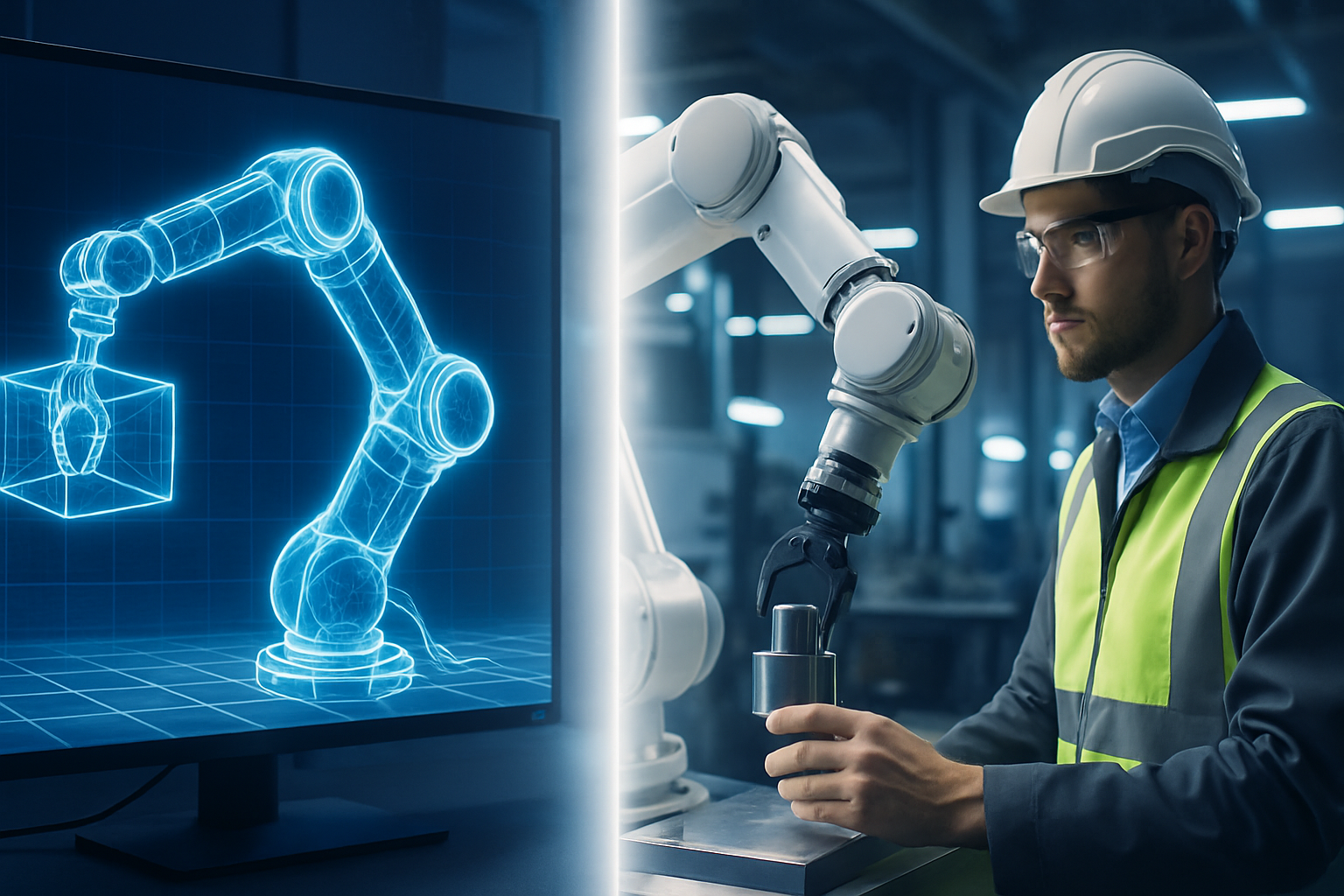
이러한 기술의 진화는 전시 산업과 브랜드 경험 마케팅에 새로운 기회를 제공한다. 예를 들어, 로봇 박람회 부스에서 단순히 로봇 팔이 움직이는 모습을 보여주는 것을 넘어, 관람객이 직접 가상 환경에서 로봇의 작업을 설정하고 시뮬레이션하는 경험을 제공할 수 있다. 관람객은 디지털 트윈 화면을 통해 로봇이 수많은 변수를 학습하고 최적의 경로를 찾아내는 과정을 눈으로 확인한다. 그리고 바로 옆 현실 공간에서 실제 로봇이 그 시뮬레이션 결과를 오차 없이 수행하는 모습을 보며 기술의 효용성을 직관적으로 체감하게 된다. 이는 제품의 성능을 일방적으로 홍보하는 것을 넘어, 고객이 기술의 가치를 스스로 발견하고 브랜드에 대한 신뢰를 쌓게 하는 강력한 경험 설계다. 로보월드나 로보테크쇼 같은 전문 전시회는 이러한 새로운 경험이 공유되고 관련 산업 생태계가 교류하며 새로운 비즈니스를 창출하는 핵심적인 역할을 한다.
궁극적으로 피지컬 AI와 디지털 트윈 기술은 ‘가상 커미셔닝(Virtual Commissioning)’의 시대를 앞당긴다. 가상 커미셔닝은 실제 공장 라인을 멈추거나 물리적 프로토타입을 제작할 필요 없이, 가상 공간에서 전체 생산 라인을 설계하고 테스트하며 최적화하는 과정을 의미한다. ABB의 하이퍼리얼리티(HyperReality) 기술이 적용된 로봇스튜디오는 실제 컨트롤러와 동일한 펌웨어로 가상 로봇을 구동하여 시뮬레이션 정확도를 99%까지 끌어올린다. 이를 통해 개발 시간은 단축되고 비용은 절감되며, 무엇보다 현장에서 발생할 수 있는 거의 모든 문제를 사전에 예측하고 해결할 수 있다. 이는 단순히 똑똑한 로봇 하나를 도입하는 차원을 넘어, 전체 생산 시스템의 효율성과 유연성을 극대화하는 운영의 혁신을 가져온다.
이처럼 로봇 기술은 이제 하드웨어의 정밀함을 넘어, 데이터를 통해 스스로 학습하고 성장하는 단계로 진화하고 있다. 가상 세계에서의 무수한 경험을 현실의 완벽한 움직임으로 구현하는 피지컬 AI는 미래 공장의 모습을 근본적으로 바꾸어 놓을 것이다. 이는 브랜드가 고객에게 기술의 신뢰성을 증명하는 방식에도 새로운 기준을 제시한다. 눈앞에서 가상과 현실이 완벽하게 동기화되는 경험만큼 강력한 메시지는 없다. 로봇이나 AI 기술을 활용한 체험 공간이나 전시 부스 제작을 검토하고 있다면, 기술의 원리를 고객의 언어로 해석하고 감각적인 경험으로 전환하는 역량이 중요하다. 플라츠랩(platzlab.com)은 로보테크쇼, 로보월드, AI EXPO 등 국내 주요 기술 전시회에서 고객사의 기술 철학을 공간 경험으로 구현해 온 전문성을 보유하고 있다.

English
The future where robots flawlessly execute tasks in the real world after perfectly learning every scenario in a virtual space is no longer a scene from a science fiction movie. This vision is becoming a reality with the advancement of Physical AI. Physical AI is a technology designed for artificial intelligence to learn and act through interaction with the physical world, and it is currently transforming the paradigm of robotics. The collaboration between robot manufacturer ABB and AI computing technology company NVIDIA stands at the center of this change. By combining robotic digital twins with synthetic data, they are ushering in an era where training in the virtual world directly translates to performance in the real world.
In the past, industrial robots excelled at repeating predefined paths but were vulnerable to unexpected variables or environmental changes. Simulation technology was introduced to solve this problem, but it faced a limitation known as the “sim-to-real gap,” where it couldn’t perfectly replicate the physical variables of the real world. A task that succeeded thousands of time in a virtual environment could easily fail in an actual factory due to minor variables like a subtle change in lighting or a component slipping. To bridge this gap, ABB and NVIDIA have integrated NVIDIA’s Omniverse libraries into ABB’s RobotStudio platform, which supports robot design, simulation, and offline programming. This enables photorealistic virtual environments and physically accurate simulations, allowing robots to accumulate experiential data in a digital twin space that is nearly identical to reality.
This technological evolution presents new opportunities for the exhibition industry and brand experience marketing. For instance, at a robotics fair, instead of just showcasing a moving robotic arm, a booth could offer visitors the experience of setting up and simulating the robot’s tasks in a virtual environment themselves. Through a digital twin interface, visitors could watch the robot learn from numerous variables and find the optimal path. Then, right beside it, they could see the real robot execute the simulation’s results flawlessly, allowing them to intuitively grasp the technology’s utility. This is a powerful experience design that moves beyond one-way product promotion, enabling customers to discover the technology’s value for themselves and build trust in the brand. Specialized exhibitions like RoboWorld or Robotech Show play a crucial role as hubs where these new experiences are shared, fostering interaction within the industry ecosystem and creating new business opportunities.
Ultimately, Physical AI and digital twin technologies are accelerating the age of Virtual Commissioning. Virtual Commissioning refers to the process of designing, testing, and optimizing an entire production line in a virtual space without having to halt the actual factory line or build physical prototypes. ABB’s RobotStudio, now enhanced with HyperReality technology, runs virtual robots on the same firmware as their physical counterparts, achieving up to 99% simulation accuracy. This shortens development times, reduces costs, and, most importantly, allows for the prediction and resolution of nearly all potential on-site issues in advance. This brings about an operational revolution that goes beyond introducing a single smart robot to maximizing the efficiency and flexibility of the entire production system.
As such, robot technology is evolving beyond hardware precision to a stage where it learns and grows on its own through data. Physical AI, which translates countless virtual experiences into perfect real-world movements, will fundamentally change the face of future factories. It also sets a new standard for how brands prove their technological reliability to customers. There is no message more powerful than the experience of seeing the virtual and the real perfectly synchronized before one’s eyes. When considering creating an experiential space or exhibition booth utilizing robot or AI technology, the ability to translate technical principles into the customer’s language and convert them into a sensory experience is crucial. Platzlab (platzlab.com) has a proven track record of embodying clients’ technological philosophies into spatial experiences at major domestic technology exhibitions such as Robotech Show, RoboWorld, and AI EXPO.
로봇·디지털트윈 행사 일정
본 글은 아래 원문 기사와 공개 자료를 바탕으로 작성되었습니다. 원문 이미지의 저작권 보호를 위해 해당 이미지는 본문에 직접 게재하지 않았습니다.
댓글 남기기