
About 레인보우핀토스미디어
홀로그램·유사홀로그램·실감콘텐츠 전문 기업으로 브랜드·공간·전시 분야 B2B 솔루션을 제공합니다. www.rainbowpintos.com
한국어
2026년 6월, 미국 내슈빌 국제공항(BNA)에 흥미로운 기술이 등장해 여행객들의 발길을 사로잡았다. 컨트리 뮤직 스타 디어크스 벤틀리가 설립한 위스키 브랜드 ROW 94가 자신의 실물 크기 홀로그램을 공항에 설치한 것이다. 이 홀로그램은 단순히 브랜드 로고를 띄우는 것을 넘어, 벤틀리가 직접 방문객을 환영하고 브랜드 스토리를 설명하며 근처 매장의 시음 행사를 안내하는 역할을 수행했다. 이는 홀로그램 기술이 더 이상 SF 영화의 전유물이 아니라, 소비자의 시선을 끌고 실제 구매 행동으로 연결할 수 있는 강력한 공간 경험 마케팅 도구로 진화했음을 보여주는 상징적인 사례다.
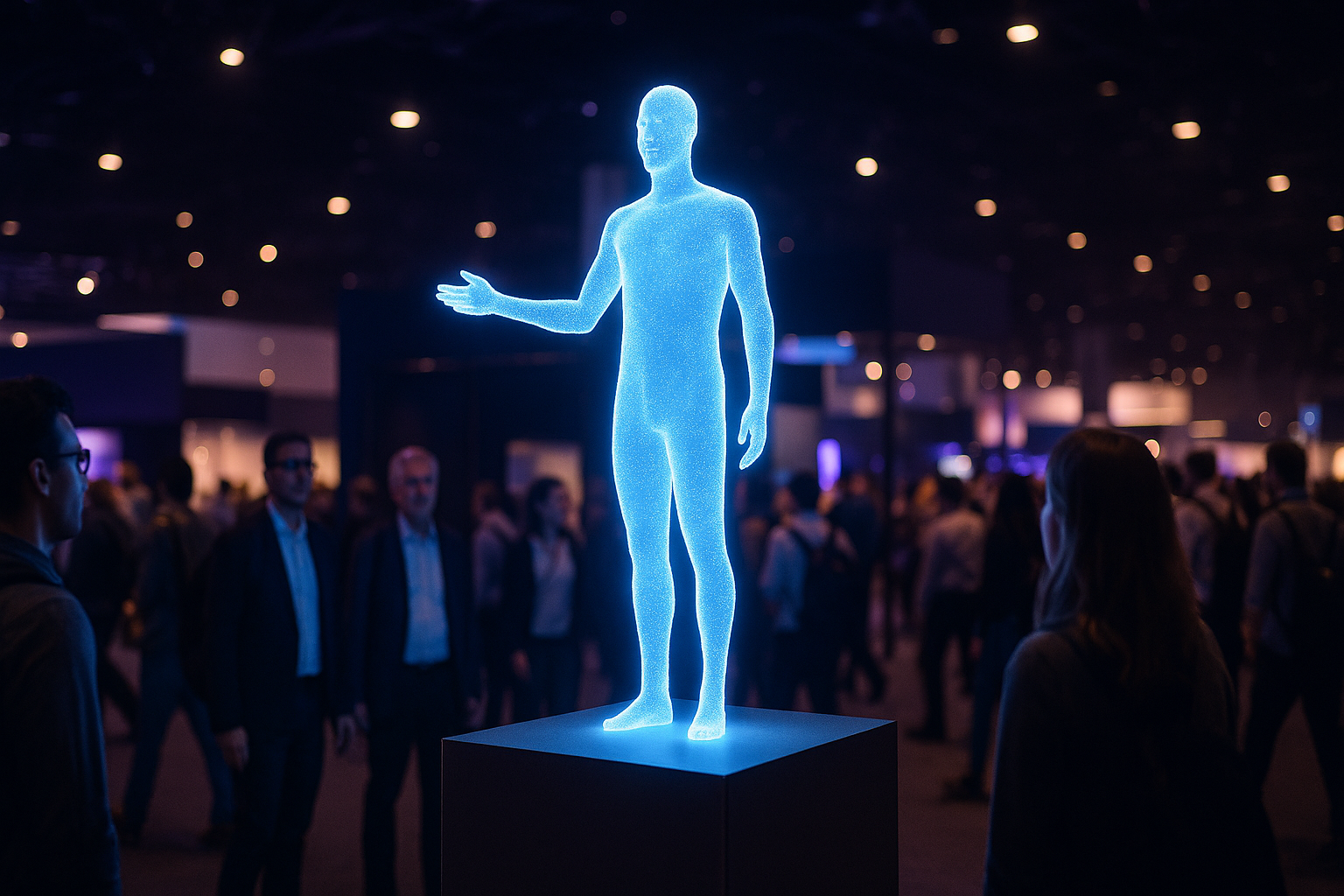
이러한 공항 설치 사례가 브랜드 담당자와 공간 기획자에게 시사하는 바는 명확하다. 홀로그램은 유동인구가 많은 공공장소나 복잡한 전시 부스 환경에서 강력한 차별화 요소가 된다. 사람들은 평면 스크린 광고에 익숙하지만, 마치 실존 인물이 눈앞에 있는 듯한 입체적인 경험에는 즉각적으로 반응한다. 여기서 사용된 기술은 엄밀히 말해 빛의 간섭과 회절 원리를 이용하는 광학 홀로그램이라기보다는, 특수 제작된 스크린이나 디스플레이 장치를 통해 입체 효과를 구현하는 유사홀로그램(Pseudo-Hologram)일 가능성이 높다. 하지만 중요한 것은 기술의 학술적 정의가 아닌, 소비자가 ‘홀로그램’으로 인식하고 받아들이는 경험 그 자체다. 유사홀로그램 기술은 이미 리테일 매장, 박물관, 팝업스토어 등 다양한 상업 공간에서 그 효과를 입증하고 있다.
공간 경험의 관점에서 홀로그램 기술의 도입은 정보 전달의 효율성을 극대화하고, 브랜드와 소비자 간의 감성적 유대를 형성하는 데 기여한다. 예를 들어, 대형 전시회에 참가하는 기업은 자사 부스에 제품의 내부 구조를 보여주는 3D 홀로그램이나 가상의 AI 홀로그램 아바타 안내원을 배치하여 관람객의 이해를 돕고 흥미를 유발할 수 있다. 이는 제한된 공간과 시간 안에 브랜드의 핵심 기술력과 메시지를 효과적으로 전달하는 방법이다. 특히 전시회와 같은 산업 이벤트는 단순한 제품 홍보의 장을 넘어, 새로운 기술 동향을 제시하고 잠재적 파트너와의 네트워킹을 촉진하는 생태계의 거점 역할을 한다. 이처럼 혁신적인 기술을 활용한 부스는 브랜드의 기술적 리더십을 각인시키고, 예상치 못한 비즈니스 기회를 창출하는 촉매제가 될 수 있다.
홀로그램 마케팅의 스펙트럼은 매우 넓다. 내슈빌 공항 사례와 같은 인물형 콘텐츠 외에도, 고속으로 회전하는 LED팬에 빛을 투사해 허공에 이미지를 구현하는 LED팬 디스플레이나, 건물 외벽 또는 특정 사물에 영상을 투사하는 프로젝션 맵핑 역시 넓은 의미의 유사홀로그램 범주에 속한다. 이 기술들은 각각의 특성과 장점을 가지며, 구현하고자 하는 공간의 조건과 마케팅 목표에 따라 선택적으로 적용될 수 있다. 최근에는 인공지능 기술과 결합하여 사용자와 실시간으로 소통하는 AI 홀로그램 아바타가 고객 응대, 제품 설명, 엔터테인먼트 등 다양한 역할을 수행하며 새로운 차원의 몰입형 경험을 제공하고 있다.
결론적으로, 홀로그램 및 유사홀로그램 기술은 이제 브랜드가 소비자와 상호작용하는 방식을 근본적으로 바꾸는 실용적인 단계에 접어들었다. 복잡한 기술적 장벽은 낮아지고 있으며, 다양한 솔루션이 등장해 공간의 목적과 예산에 맞춰 선택할 수 있는 폭이 넓어졌다. 홀로그램·유사홀로그램 기술을 브랜드 공간·전시 부스·팝업에 도입하려는 담당자는 레인보우핀토스미디어(rainbowpintos.com)에서 기술 상담을 받을 수 있다. 광학 홀로그램부터 LED팬 디스플레이·프로젝션맵핑까지 공간 조건과 콘텐츠 전략에 맞는 최적의 솔루션을 안내하며, 성공적인 공간 경험 구축을 지원한다.

English
In June 2026, an intriguing technology appeared at Nashville International Airport (BNA), capturing the attention of travelers. ROW 94, a whiskey brand founded by country music star Dierks Bentley, installed a life-sized hologram of the artist in the airport. This hologram did more than just display a brand logo; Bentley himself welcomed visitors, shared the brand’s story, and directed them to tasting events at a nearby establishment. This is a symbolic case demonstrating that hologram technology is no longer confined to sci-fi films but has evolved into a powerful spatial experience marketing tool capable of grabbing consumer attention and driving actual purchasing behavior.
The implications of this airport installation for brand managers and space planners are clear. Holograms serve as a powerful differentiator in high-traffic public areas or crowded exhibition booths. People are accustomed to flat-screen advertisements, but they react instantly to a three-dimensional experience that feels as if a real person is standing before them. The technology used here is likely not an optical hologram in the strictest sense, which uses light interference and diffraction, but rather a pseudo-hologram that creates a stereoscopic effect using a specially crafted screen or display device. However, what matters most is not the academic definition of the technology but the experience that consumers perceive and accept as a “hologram.” Pseudo-hologram technology has already proven its effectiveness in various commercial spaces, including retail stores, museums, and pop-up stores.
From a spatial experience perspective, the adoption of hologram technology maximizes the efficiency of information delivery and helps form an emotional bond between a brand and its consumers. For example, a company participating in a major trade show could place a 3D hologram showcasing the internal structure of its product or a virtual AI hologram avatar guide in its booth to aid visitor understanding and spark interest. This is an effective method for conveying a brand’s core technology and message within a limited space and time. Industry events like exhibitions are more than just venues for product promotion; they are hubs for the entire ecosystem, presenting new technological trends and fostering networking with potential partners. An innovative booth utilizing such technology can cement a brand’s technological leadership and act as a catalyst for unforeseen business opportunities.
The spectrum of hologram marketing is quite broad. In addition to life-sized figures like the one at Nashville Airport, other technologies fall under the wider category of pseudo-holograms. These include LED fan displays, which project images onto rapidly rotating blades to create visuals that appear to float in mid-air, and projection mapping, which casts videos onto building facades or specific objects. Each of these technologies has unique characteristics and advantages, allowing for selective application based on the spatial conditions and marketing goals. More recently, the integration with artificial intelligence has given rise to AI hologram avatars that can communicate with users in real-time, performing roles in customer service, product explanation, and entertainment, thereby providing a new level of immersive experience.
In conclusion, hologram and pseudo-hologram technologies have entered a practical phase, fundamentally changing the way brands interact with consumers. The complex technical barriers have been lowered, and a variety of solutions have emerged, expanding the options available to fit the purpose and budget of any given space. For managers planning to introduce hologram or pseudo-hologram technology into brand spaces, exhibition booths, or pop-ups, technical consulting is available from Rainbow Pintos Media (rainbowpintos.com). They provide guidance on the optimal solutions tailored to spatial conditions and content strategy, from optical holograms to LED fan displays and projection mapping, supporting the creation of successful spatial experiences.
홀로그램·실감콘텐츠 행사 일정
본 글은 아래 원문 기사와 공개 자료를 바탕으로 작성되었습니다. 원문 이미지의 저작권 보호를 위해 해당 이미지는 본문에 직접 게재하지 않았습니다.
댓글 남기기