
한국어
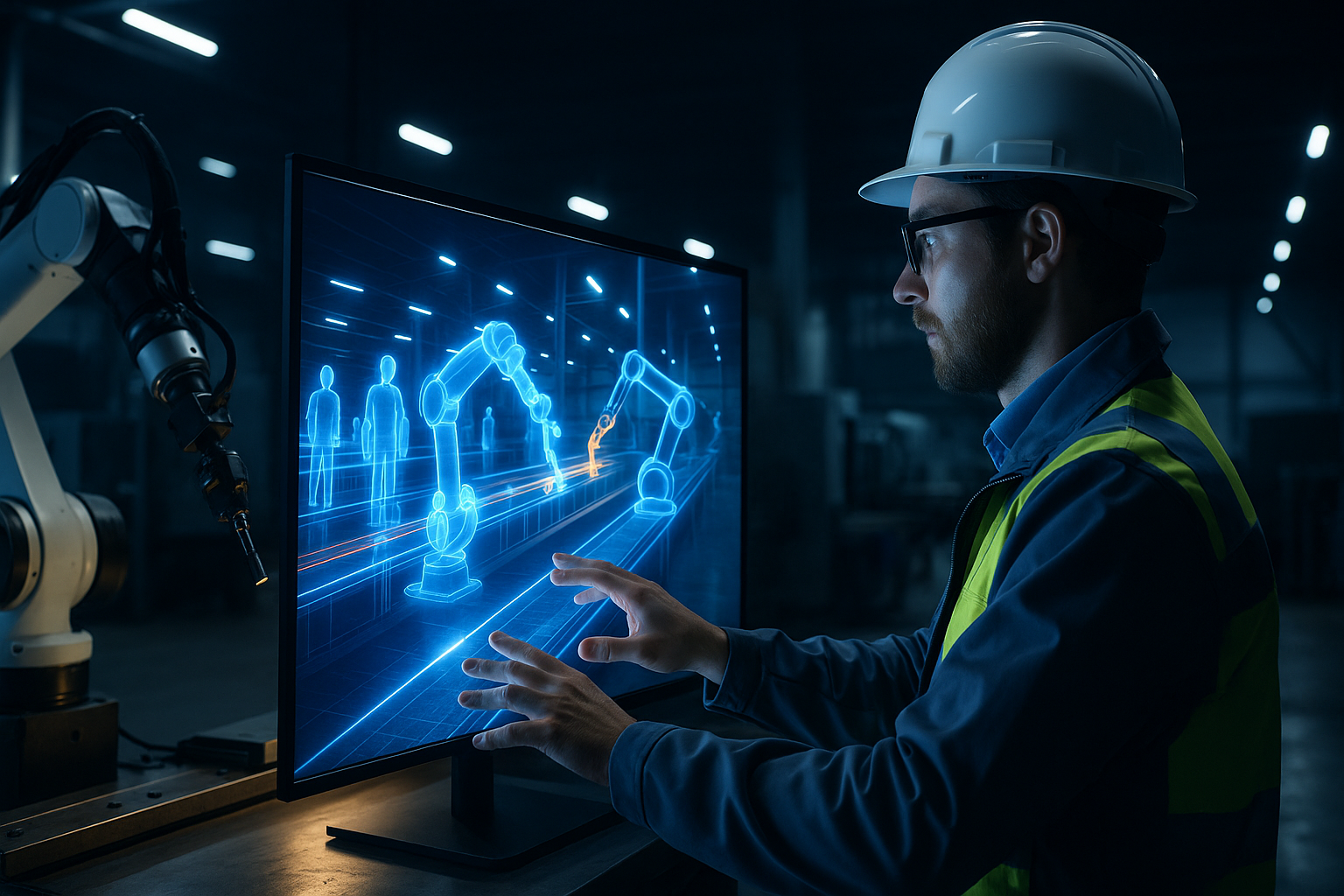
물리적 세계와 상호작용하는 피지컬 AI(Physical AI)의 시대가 본격화되면서, 로봇을 실제 생산 현장에 투입하기 전 가상 환경에서 먼저 테스트하고 검증하는 디지털트윈 기술의 중요성이 그 어느 때보다 커지고 있다. 로봇이 수행할 작업의 모든 경로와 변수를 시뮬레이션하고, 발생 가능한 충돌이나 오류를 사전에 제거하는 과정은 이제 선택이 아닌 필수가 되었다. 이는 단순히 비용을 절감하는 것을 넘어, 로봇과 인간이 협업하는 공간의 안정성을 확보하고 전체 생산 라인의 효율을 극대화하는 핵심적인 운영 경험으로 자리 잡고 있다.
최근 엔비디아(NVIDIA)가 공개한 새로운 개발 플랫폼은 이러한 흐름을 가속화한다. ‘아이작 심(Isaac Sim)’과 같은 시뮬레이션 툴을 활용해 실제와 거의 흡사한 가상 공장을 구축하고, 그 안에서 로봇의 정책을 훈련하고 평가하는 것이다. 반도체 기업 SK하이닉스가 엔비디아 옴니버스(Omniverse)를 이용해 반도체 공장 디지털트윈을 구현하는 사례는 대표적이다. 이는 단순한 3D 모델링을 넘어, 실제 공장의 데이터를 기반으로 로봇의 움직임과 작업 효율을 예측하는 ‘살아있는’ 시뮬레이션 공간을 창조하는 경험이다. 이러한 가상 커미셔닝(Virtual Commissioning)을 통해 기업은 값비싼 물리적 장비를 설치하기 전에 최적의 동선을 찾아내고, 로봇이 겪을 시행착오를 디지털 세상에서 먼저 겪게 할 수 있다.
이러한 기술의 진화는 전시 산업에도 새로운 가능성을 제시한다. 산업 전시회는 더 이상 완성된 로봇 제품을 선보이는 쇼케이스에 머무르지 않는다. 대신, 각 기업의 디지털트윈 환경 그 자체가 하나의 중요한 전시 콘텐츠가 될 수 있다. 관람객은 가상으로 구현된 스마트 팩토리에서 로봇이 어떻게 학습하고(Sim-to-Real), 다양한 돌발 상황에 대처하는지를 직접 체험하며 기술의 가치를 직관적으로 이해하게 된다. 이는 일회성 행사를 넘어, 잠재 고객과 파트너사들이 자사의 제조 환경에 이 기술을 어떻게 적용할 수 있을지 구체적인 영감을 얻고 새로운 비즈니스 협력을 모색하는 교류의 장으로 기능하게 될 것이다.
결국 피지컬 AI 시대의 로봇 경험(Robot Experience)은 물리적 로봇의 화려한 움직임에만 국한되지 않는다. 보이지 않는 곳에서 수없이 반복되는 시뮬레이션과 데이터 학습 과정, 즉 디지털트윈을 통한 가상 검증의 경험이야말로 미래 제조 현장의 성공을 담보하는 핵심이다. 실제 공간에 로봇을 배치하기 전에 가상 공간에서 먼저 완벽한 운영 시나리오를 설계하고 경험하는 것, 이것이 바로 우리가 주목해야 할 새로운 차원의 로봇 경험이다.

English
As the era of Physical AI—artificial intelligence that interacts with the physical world—gains momentum, the importance of digital twin technology for testing and verifying robots in virtual environments before their deployment on the actual production floor has never been greater. Simulating every path and variable of a robot’s tasks to preemptively eliminate potential collisions or errors is no longer an option but a necessity. This process goes beyond mere cost savings; it has become a critical operational experience that ensures the safety of human-robot collaborative spaces and maximizes the efficiency of the entire production line.
Recent platforms unveiled by NVIDIA are accelerating this trend. Utilizing simulation tools like Isaac Sim, companies can build hyper-realistic virtual factories to train and evaluate robot policies before any real-world implementation. A prime example is the semiconductor manufacturer SK hynix, which is using NVIDIA Omniverse to create digital twins of its fabrication plants. This transcends simple 3D modeling, creating a living simulation space that predicts robot movements and operational efficiency based on real factory data. Through this virtual commissioning, companies can identify optimal workflows and allow robots to undergo trial and error in the digital realm before expensive physical equipment is ever installed.
This technological evolution also presents new opportunities for the exhibition industry. Industrial trade shows are no longer just showcases for finished robotic products. Instead, a company’s digital twin environment can become a compelling exhibition in itself. Visitors can step into a virtual smart factory and experience firsthand how robots learn (Sim-to-Real) and adapt to various unexpected situations, allowing them to intuitively grasp the technology’s value. This transforms a one-time event into a dynamic hub where potential clients and partners can gain concrete inspiration for applying these solutions to their own manufacturing environments, fostering new business collaborations.
Ultimately, the Robot Experience (RX) in the age of Physical AI is not confined to the spectacular movements of physical machines. The true key to success in the factory of the future lies in the unseen process of countless simulations and data-driven learning. The experience of designing and perfecting operational scenarios in a virtual space before deploying a single robot to the physical one is the new frontier. This virtual verification through digital twins is the next level of the robot experience that demands our attention.
로봇·디지털트윈 행사 일정
본 글은 아래 원문 기사와 공개 자료를 바탕으로 작성되었습니다. 원문 이미지의 저작권 보호를 위해 해당 이미지는 본문에 직접 게재하지 않았습니다.
댓글 남기기