
한국어
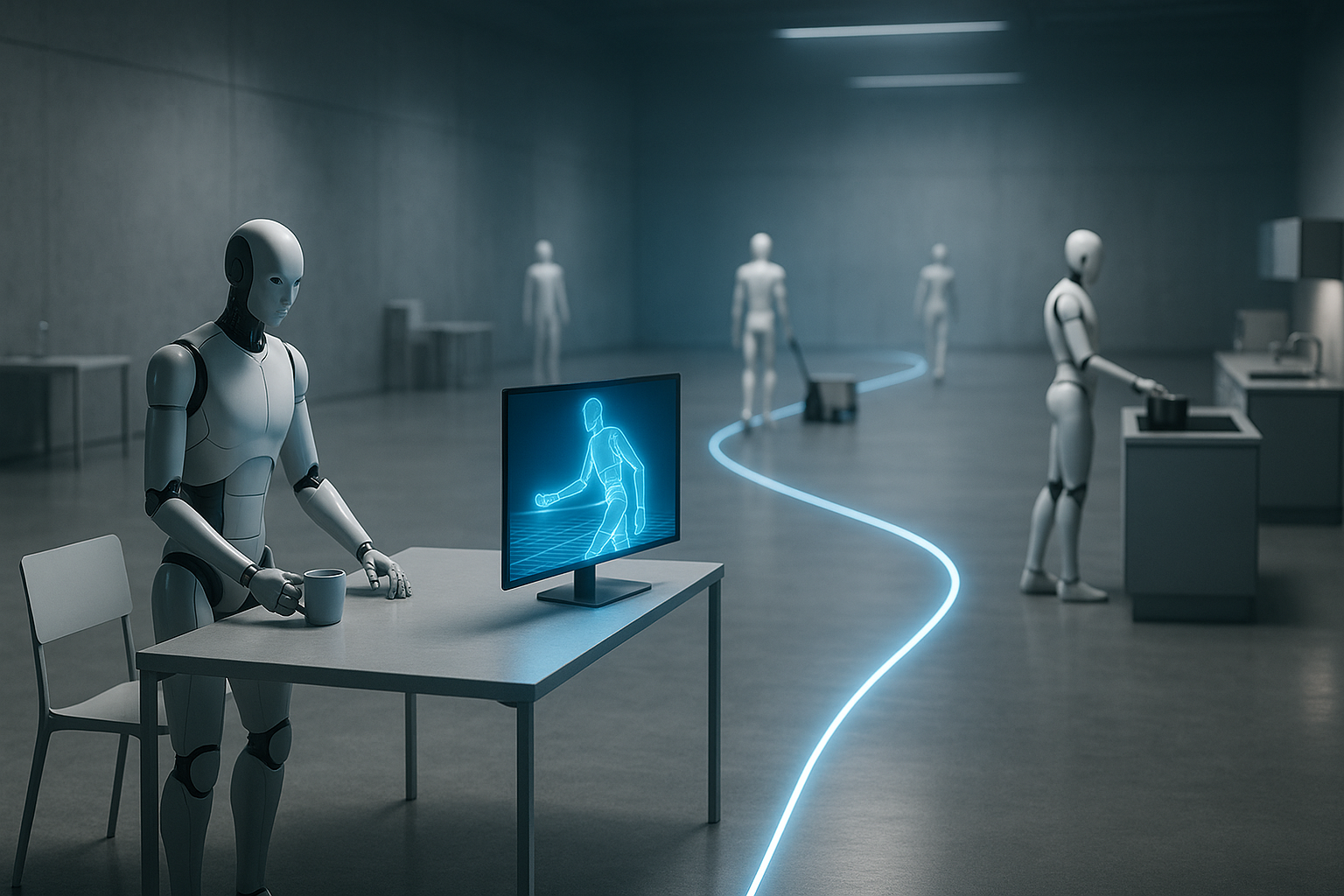
로봇이 우리 삶과 산업 현장에 자연스럽게 스며들기 위해 넘어야 할 가장 큰 장벽은 예측 불가능한 현실 세계와의 간극입니다. 이 ‘Sim-to-Real’ 격차를 해소하기 위한 거대한 실험장이 문을 엽니다. 최근 중국 상하이에 문을 연 5,000 평방미터 규모의 이종(heterogeneous) 휴머노이드 로봇 훈련 시설은 로봇 경험(RX)의 패러다임이 어떻게 진화하고 있는지를 명확히 보여주는 상징적인 공간입니다. 이곳에서는 10여 개 제조사의 100가지가 넘는 다양한 로봇들이 실제와 같이 구현된 가정 및 산업 환경 속에서 공동으로 훈련하며 데이터를 축적합니다. 이는 단순히 로봇의 성능을 시험하는 테스트베드를 넘어, 로봇의 ‘경험’을 설계하고 공유하는 데이터 플랫폼으로서 기능합니다.
이러한 물리적 훈련 시설의 등장은 ‘Physical AI’ 시대의 본격적인 개막을 알립니다. Physical AI는 디지털 공간의 지능이 물리적 세계와 상호작용하며 학습하고 행동하는 것을 의미합니다. 상하이의 훈련 시설은 바로 이 Physical AI를 위한 데이터 수집의 장입니다. 각기 다른 하드웨어와 소프트웨어를 가진 로봇들이 동일한 환경에서 작업을 수행하며 쌓는 데이터는 특정 로봇이나 제조사에 종속되지 않는, 범용적인 로봇 지능 모델 개발의 핵심 자산이 됩니다. 이는 개별 기업의 연구실에서 파편적으로 수집되던 데이터의 한계를 극복하고, 업계 전체가 로봇 지능의 발전을 가속할 수 있는 공유 인프라를 구축했다는 점에서 중요한 의미를 가집니다.
이러한 흐름은 로봇 산업의 공간 경험을 재정의합니다. 로봇의 움직임, 안전, 협업 등을 검증하는 디지털 트윈과 가상 커미셔닝 기술은 이제 거대한 물리적 공간과 결합하여 더욱 정교한 시뮬레이션 환경을 구축합니다. 로봇은 가상 세계에서 수없이 많은 시행착오를 겪으며 학습하고, 훈련 시설이라는 통제된 현실에서 그 학습을 검증하며 실제 환경에 투입될 준비를 마칩니다. 이 과정은 제품 출시 전 품질을 검증하는 것을 넘어, 로봇이 제공할 서비스 경험 전체를 미리 설계하고 최적화하는 운영형 경험의 핵심입니다. 전시회와 같은 산업 교류의 장이 새로운 기술과 비즈니스를 연결하는 거점 역할을 하듯, 이 훈련 시설은 로봇 산업 생태계의 지능을 한 단계 끌어올리는 구심점이 될 것입니다.
결국 이 거대한 훈련 시설이 주는 가장 중요한 메시지는 로봇의 지능이 더 이상 개별 하드웨어의 성능에만 의존하지 않는다는 사실입니다. 다양한 로봇들이 상호작용하고 데이터를 공유하며 함께 똑똑해지는 ‘집단 지성’의 시대가 열리고 있습니다. 가정과 공장, 병원 등 다양한 공간에서 인간과 안전하게 협업하는 로봇을 현실화하기 위한 이 거대한 공간적 실험은, 로봇이 어떻게 현실 세계의 경험을 학습하고 우리 사회의 일원으로 자리 잡게 될지에 대한 청사진을 제시하고 있습니다. 이는 단순한 기술 시연을 넘어, 미래의 브랜드 경험과 서비스 공간을 근본적으로 바꾸는 출발점입니다.

English
The most significant barrier for robots to seamlessly integrate into our lives and industries is the gap between simulation and unpredictable reality. A massive new experimental ground is opening to bridge this ‘sim-to-real’ gap. The recent launch of a 5,000-square-meter heterogeneous humanoid robot training facility in Shanghai is a symbolic space that clearly illustrates how the paradigm of Robot Experience (RX) is evolving. Here, over 100 different types of robots from more than a dozen manufacturers will train together and accumulate data in simulated household and industrial environments. This facility functions not merely as a testbed for robot performance, but as a data platform for designing and sharing robot ‘experiences’.
The emergence of such physical training facilities signals the full-fledged beginning of the “Physical AI” era. Physical AI refers to intelligence from the digital realm learning and acting through interaction with the physical world. The Shanghai training facility is a vast field for collecting data for this very purpose. The data accrued by robots with different hardware and software performing tasks in the same environment becomes a core asset for developing generalized robot intelligence models, not tied to a specific robot or manufacturer. This is significant in that it overcomes the limitations of fragmented data collected in individual company labs and establishes a shared infrastructure for the entire industry to accelerate the advancement of robotic intelligence.
This trend redefines the spatial experience of the robotics industry. Digital twin and virtual commissioning technologies, used to verify robot movements, safety, and collaboration, are now combined with large-scale physical spaces to build more sophisticated simulation environments. Robots undergo countless trials and errors in the virtual world to learn, then verify that learning in the controlled reality of the training facility, preparing them for deployment in the real world. This process goes beyond pre-launch quality assurance; it is the core of an operational experience that designs and optimizes the entire service experience the robot will provide. Just as industry events and exhibitions serve as hubs connecting new technologies and businesses, this training facility will become a focal point for elevating the intelligence of the robotics ecosystem.
Ultimately, the most important message from this massive training facility is that a robot’s intelligence no longer depends solely on its individual hardware performance. An era of ‘collective intelligence’ is dawning, where diverse robots interact, share data, and grow smarter together. This grand spatial experiment, aimed at realizing robots that can safely collaborate with humans in homes, factories, and hospitals, presents a blueprint for how robots will learn from real-world experiences and establish themselves as members of our society. This is more than a simple technology demonstration; it is the starting point for fundamentally changing the brand experiences and service spaces of the future.
로봇·디지털트윈 행사 일정
본 글은 아래 원문 기사와 공개 자료를 바탕으로 작성되었습니다. 원문 이미지의 저작권 보호를 위해 해당 이미지는 본문에 직접 게재하지 않았습니다.
댓글 남기기